- Photoluminescent signalisation
- PHOTOLUMINESCENT BAND LLL
- Phosphorescent paints
- FLUORESCENT PAINTS
- BLACKLIGHT PAINTS
- PHOSPHORESCENT TAPES
- DECORATION
- PHOTOLUMINESCENT EMERGENCY EXIT SIGN
- SWITCHES
- STAIR NOSING
- PHOTO PAPER
- PHOTOLUMINESCENT ADHESIVE FILM
- RETRO REFLECTIVE TAPE
- Retroreflective paint
- PANEL PVC, ALU STEEL
- INFRARED INK AND X-RAY
- Phosphorescents Stones
- PRIMERS AND CLEARCOATS
- Luminescent road and cycle path
- Photoluminescent adhesives
- PHOTOLUMINESCENT PIGMENTS
- Fluorescents pigments and dyes
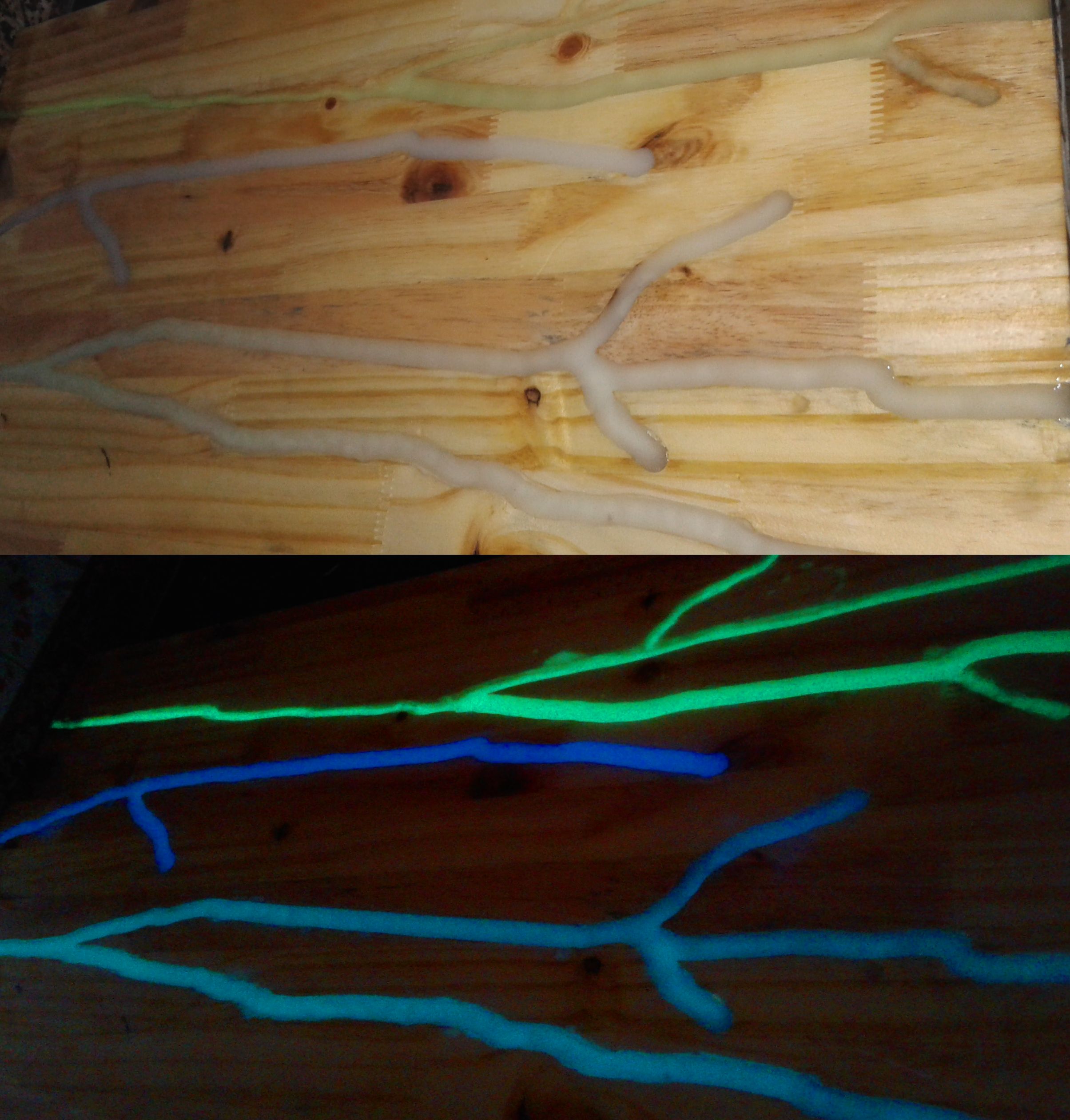
- Epoxy Resins and "River Table"
- Spraygun and airbrush
- Accessories
- Tactile signalization
- Protective Equipment
- Phosphorescent Papyrus
- Phosphorescent gems, pearls and jewellery
- Special effects paints
- Screen printing inks
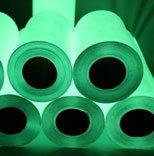
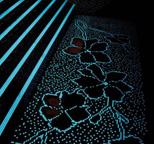

For photoluminescent equipment: The luminance of phosphorescent equipment, and in particular of Arco Iris-approved and certified products, depends directly on the lighting conditions to which they are subjected prior to installation. Three parameters are decisive: the type of light source, the duration of exposure and the intensity of the lighting. All components of a phosphorescent safety system must be properly illuminated beforehand to ensure effective light emission in the dark.
Photoluminescent equipment must always be positioned as close as possible to light sources and must under no circumstances be installed in areas of permanent shade. The minimum required illuminance must not be less than 25 lux. Continuous exposure is strongly recommended. In the absence of permanent lighting, the light excitation phase must be provided for a minimum of 15 minutes per hour, with no interruption exceeding 45 minutes.
Phosphorescent signals and choice of lighting type
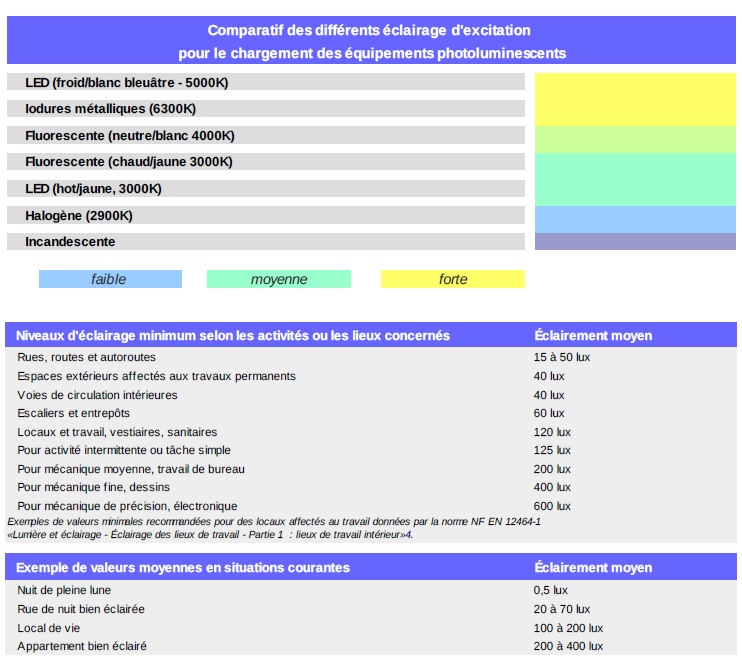
The choice of lighting system used to excite photoluminescent materials is a key factor in performance. It is important to take into account not only the light intensity, but also the colour temperature, expressed in Kelvin (K), as well as the light spectrum emitted by the source. These parameters directly influence the charge capacity and the duration of light emission of photoluminescent pigments. So-called ‘cool’ light sources are preferable. Colour temperatures between 3000 K and 6500 K are considered optimal. The recommended technologies are primarily LEDs, metal halide lamps and fluorescent sources, which offer a spectrum favourable for recharging photoluminescent materials. As a guide, light exposure of between 100 and 200 lux for a duration of 10 minutes allows for visible light emission in total darkness for approximately 4 hours for Class C products, and up to 6 hours for Class D products.
Comparison of excitation light sources
Not all light sources are equally effective at charging photoluminescent materials. Cool-white LEDs (around 5000 K) offer high efficiency. Metal halide lamps, with a colour temperature of around 6300 K, are also among the most efficient sources. Fluorescent tubes have varying efficiency depending on their colour temperature: neutral versions (around 4000 K) are more efficient than warm-light versions (around 3000 K). Warm-light LEDs, halogen lamps (2900 K) and incandescent lamps, on the other hand, are significantly less efficient for photoluminescent excitation.
Minimum illuminance levels according to use
Illuminance levels vary depending on the activities and environments in question. As a guide, the following average values are generally accepted:
Streets, roads and motorways: 15 to 50 lux
Outdoor areas used for permanent work: 40 lux
Indoor walkways: 40 lux
Stairways and warehouses: 60 lux
Workrooms, changing rooms and toilets: 120 lux
Intermittent activities or simple tasks: 125 lux
Medium-duty mechanical work or office work: 200 lux
Fine mechanical work or drafting: 400 lux
Precision work, electronics: 600 lux
These levels ensure that the environment is sufficiently lit to guarantee both personal safety and the effective recharging of photoluminescent devices.
Examples of common situations
By way of comparison, certain everyday situations can help to better understand illuminance levels :
- A full moon night corresponds to approximately 0.5 lux,
a well-lit street at night has an illuminance of between 20 and 70 lux,
a living area generally reaches 100 to 200 lux,
a well-lit flat has an illuminance of between 200 and 400 lux.
Normative references
The recommended minimum values for work premises are set out in standard NF EN 12464-1, which covers lighting in indoor workplaces. Compliance with these illuminance levels is essential to ensure visual comfort, the safety of occupants and the effectiveness of integrated photoluminescent systems.