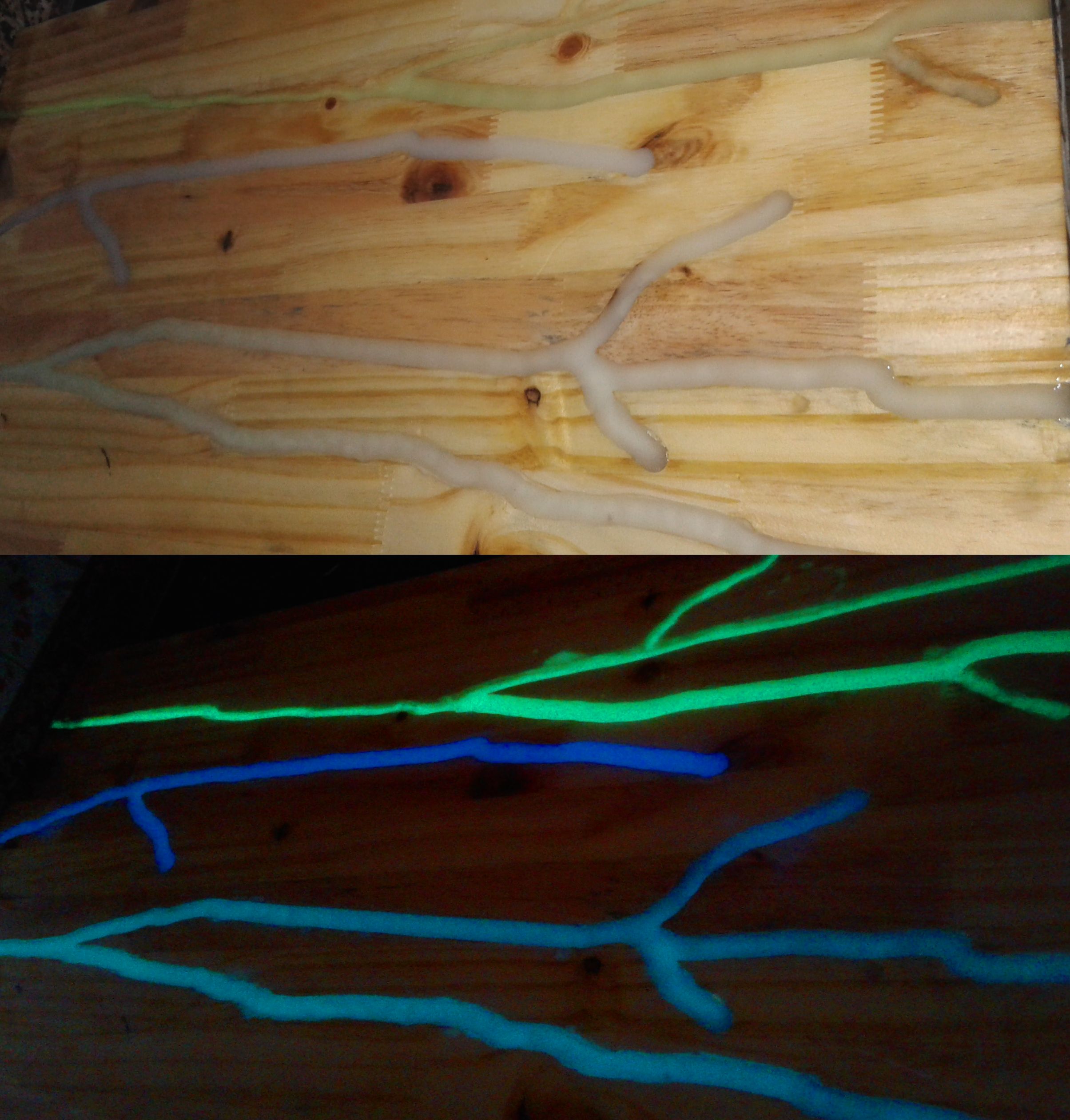
- Photoluminescent signalisation
- PHOTOLUMINESCENT BAND LLL
- Phosphorescent paints
- FLUORESCENT PAINTS
- BLACKLIGHT PAINTS
- PHOSPHORESCENT TAPES
- DECORATION
- PHOTOLUMINESCENT EMERGENCY EXIT SIGN
- SWITCHES
- STAIR NOSING
- PHOTO PAPER
- PHOTOLUMINESCENT ADHESIVE FILM
- RETRO REFLECTIVE TAPE
- Retroreflective paint
- PANEL PVC, ALU STEEL
- INFRARED INK AND X-RAY
- Phosphorescents Stones
- PRIMERS AND CLEARCOATS
- Luminescent road and cycle path
- Photoluminescent adhesives
- PHOTOLUMINESCENT PIGMENTS
- Fluorescents pigments and dyes
- Epoxy Resins and "River Table"
- Spraygun and airbrush
- Accessories
- Tactile signalization
- Protective Equipment
- Phosphorescent Papyrus
- Phosphorescent gems, pearls and jewellery
- Special effects paints
- Screen printing inks
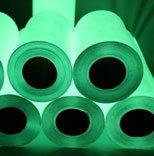
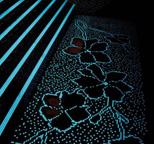

Definition of phosphorescent safety products
Phosphorescent safety equipment is designed to remain visible regardless of lighting conditions. It ensures effective visibility in both normal lighting conditions and in dark or completely pitch-black environments. This capability is based on the photoluminescent properties of its surface, made possible by the incorporation of specific phosphorescent pigments.
These pigments react to an input of light, known as the excitation phase, by storing light energy. Once the light source is removed, they release this energy in the form of phosphorescence for a set period of time. This delayed light emission ensures that visual information remains visible even in the event of a power cut or lighting failure.
A complete photoluminescent safety system is therefore not limited to visible equipment alone. It must incorporate suitable excitation lighting, capable of providing the light energy required to charge the pigments, in order to guarantee the expected performance of the system.
Fields of application for phosphorescent safety equipment
Photoluminescent equipment is mainly used indoors, particularly in commercial, industrial or residential buildings. However, it can also be used outdoors, provided that it is dark enough for the emitted light to be clearly visible.
Its primary purpose is safety signage. It is particularly used for:
signposting of evacuation routes,
assisting with the evacuation of people,
supporting emergency response operations,
visually identifying specific items or areas,
permanent marking of routes or equipment.
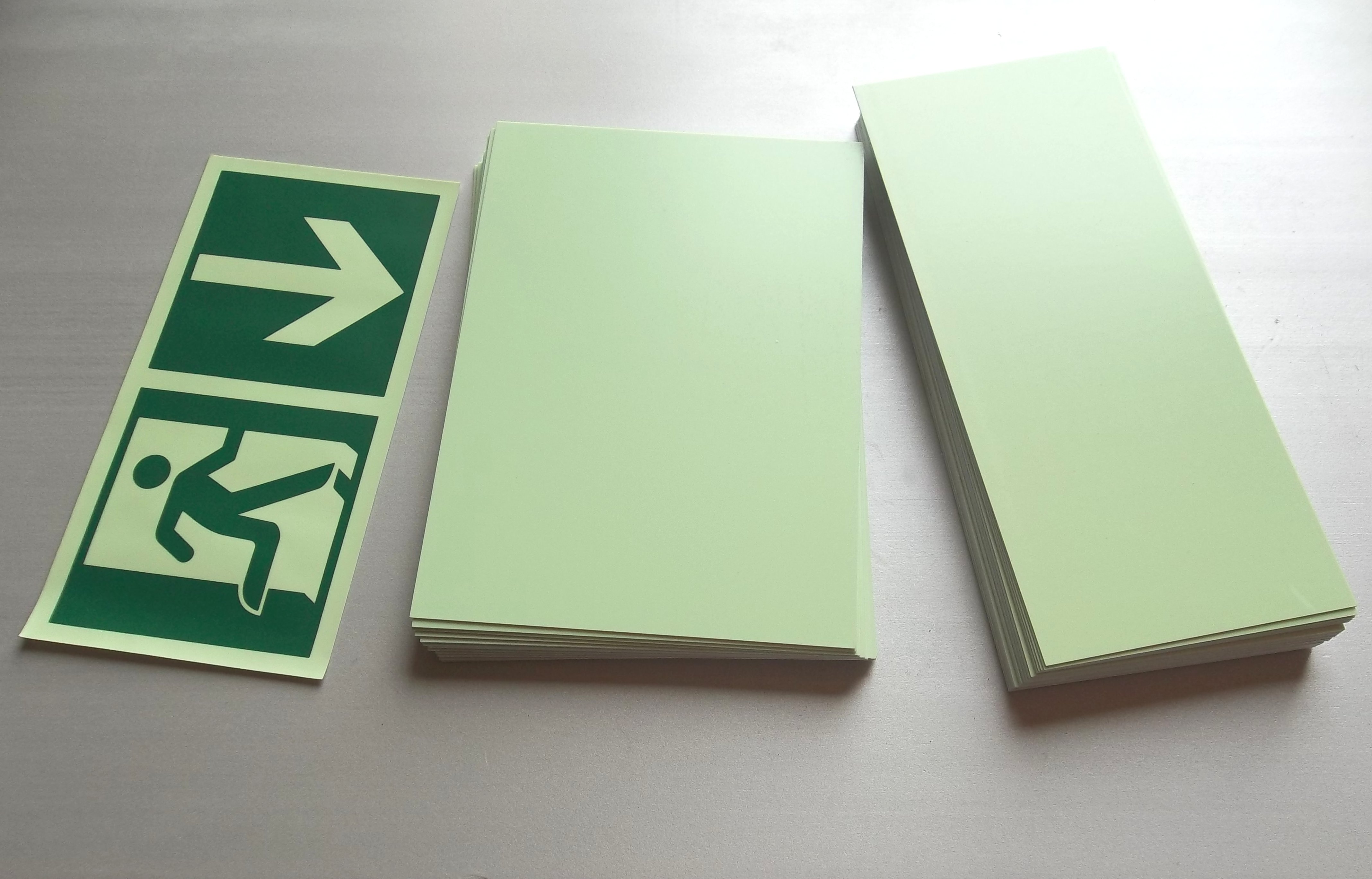
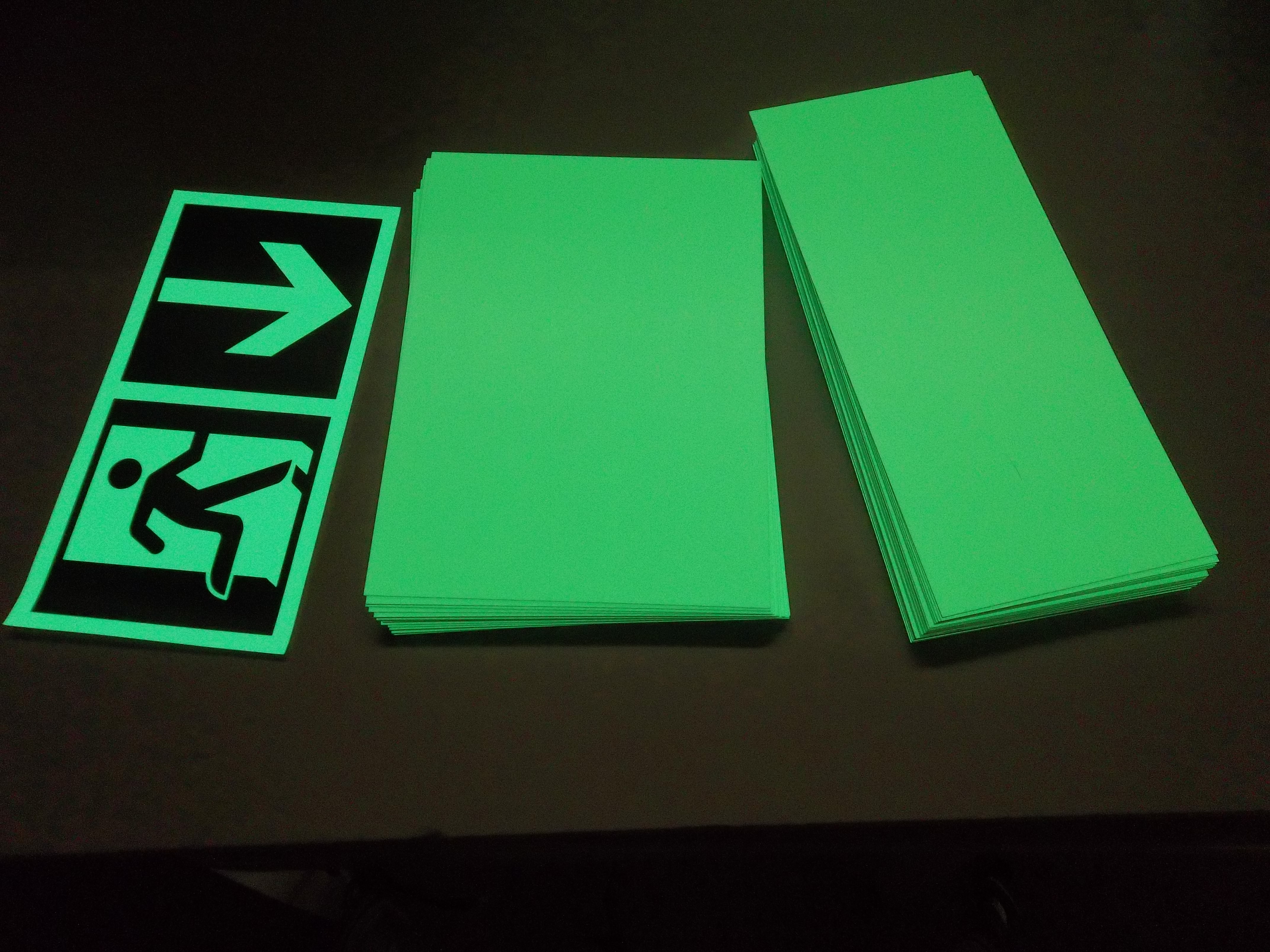
Classification of phosphorescent equipment
Photoluminescent safety equipment is classified according to several complementary criteria, enabling the product to be tailored precisely to its environment and function.
Classification by material
The substrates used to support the photoluminescent layer can vary greatly.
These include, in particular:
aluminium,
rigid PVC,
vinyl adhesive,
glass,
stainless steel,
photoluminescent paint,
as well as other specific substrates.
Quel que soit le matériau choisi, les produits ARCO IRIS® sont conçus pour offrir des performances photoluminescentes élevées, indépendamment du support.
Classification of phosphorescent equipment
The classification based on photoluminescent performance, or the classification of phosphorescent equipment, means that equipment is also differentiated by its luminance level, which is divided into classes ranging from A to G. These classes define the intensity of light emitted after the light source has been switched off, as well as the duration of the afterglow. This criterion is decisive when choosing a product, particularly in high-risk environments or those subject to strict regulatory requirements.
Classification by function
Photoluminescent equipment can serve various purposes :
safety signs,
floor or wall markings,
evacuation equipment,
information boards.
There are products designed for everyday use, as well as specialised equipment known as ‘LLL’ (Low Location Lighting). The latter form part of a standardised photoluminescent guidance system, as defined by standard NF X 080-50-2, and are subject to additional performance requirements.
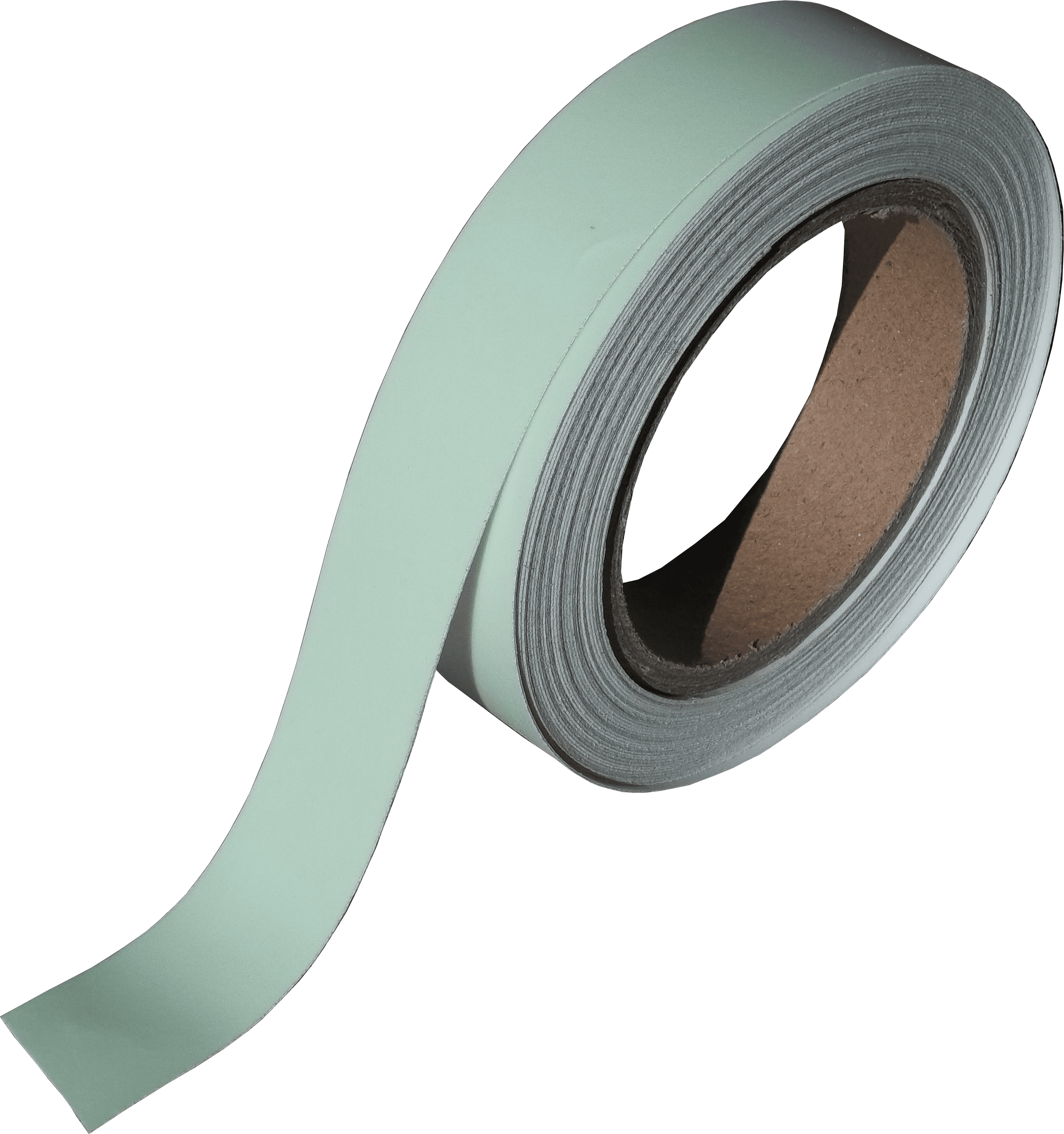
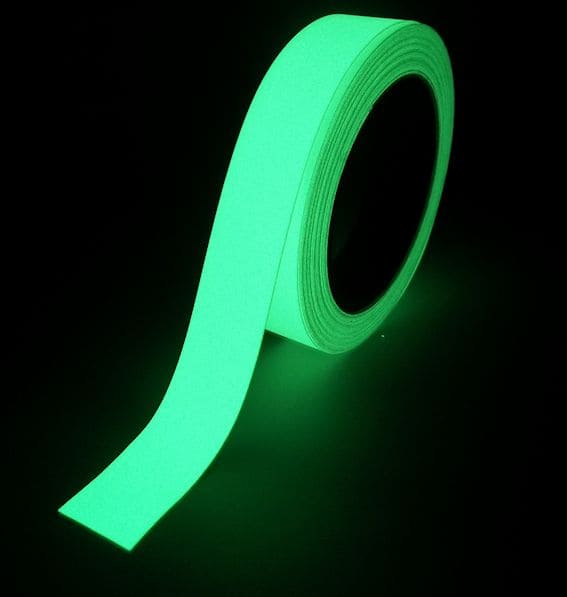
Resistance to environmental conditions
Another classification criterion relates to resistance to environmental conditions. This encompasses all the characteristics that enable equipment to remain functional throughout its service life, under the intended conditions of use:
adverse weather conditions,
abrasion,
repeated cleaning,
various mechanical stresses.
Materials
Phosphorescent safety equipment is manufactured using various materials that serve as a substrate for the photoluminescent layer. The choice of material depends on several factors: the desired level of luminance, the required robustness and durability, the conditions of use, and the budget.
Comparison of durability and cost
PVC vinyl – Flexible adhesive
Luminance class: B to E
Thickness: 0.25 to 0.35 mm
Dimensions: 2.5 cm to 100 cm
Advantages: very economical, good overall durability
Disadvantages: low resistance to abrasion and fire, not recommended for outdoor use
PVC – Semi-rigid sheet
Luminance class: B to G
Thickness: 1.1 to 1.4 mm
Dimensions: 2.5 cm to 120 cm
Advantages: cost-effective, good overall durability
Disadvantages: poor resistance to abrasion and fire; not recommended for outdoor use
Aluminium – Rigid panel
Luminance class: B to G
Thickness: 0.7 to 1.4 mm
Dimensions: 2.5 cm to 100 cm
Advantages: excellent durability, recommended for all conditions
Usage: indoor and outdoor
Price range: mid-range
Stainless steel – Rigid panel
Luminance class: B to G
Thickness: 1.1 to 1.7 mm
Dimensions: 2.5 cm to 100 cm
Advantages: exceptional durability, suitable for extreme conditions
Usage: indoor and outdoor
Budget: high
Glass – Thick glass
- Luminance class: B to G
Thickness: 5 to 15 mm
Dimensions: 5 to 20 cm
Advantages: excellent durability, premium use and high
traffic areas
Usage: indoor and outdoor
Budget: high
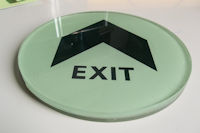
Certain items made from aluminium, stainless steel and, in particular, glass can be custom-made to meet specific architectural or technical requirements.
Care and maintenance
Photoluminescent safety equipment requires no special maintenance. It is designed for long-term use without the need for major servicing. A simple periodic visual inspection, combined with dusting and cleaning using a mild detergent, is sufficient to keep the products clean and fully functional.
The photoluminescence of ARCO IRIS products generally lasts for over 20 years without any significant loss of performance, making them reliable and long-lasting solutions for building safety.
List of Arco Iris phosphorescent equipment
ARCO IRIS SAS specialises in photoluminescent signage equipment, designed to ensure visibility and guidance in all circumstances, even in the event of a power cut. The Arco Iris list of photoluminescent equipment includes photoluminescent safety signs (emergency exits, directions, distances), road markings and floor markings, LLL (Low Location Lighting) markers, as well as markers for stairs, ramps and handrails. ARCO IRIS also offers robust solutions in aluminium, stainless steel, PVC and glass, suitable for both indoor and outdoor environments. All products provide photoluminescent performance in accordance with standards and ensure clear and continuous identification of safety zones and routes.
Glow-in-the-dark light switch stickers
Glow-in-the-dark switch stickers are a simple and effective way to quickly locate a switch in the dark. Thanks to their photoluminescent pigments, they charge in ambient light and emit visible light for several hours after the lights have been switched off. Easy to apply, glow-in-the-dark switch stickers are attached directly around or onto the switch plate, without the need for tools or electrical modifications. These stickers improve everyday convenience and enhance safety, particularly in bedrooms, corridors, stairwells or commercial premises. They help prevent fumbling in the dark and the risk of falls. Durable and maintenance-free, phosphorescent switch stickers offer an economical, discreet and reliable solution for immediate identification, even during a power cut.
Efficacy of different types of phosphorescent materials
As a general rule, the effectiveness of different types of photoluminescent devices depends mainly on their luminance level, their exposed surface area, the type of pigments used, and the excitation lighting conditions. Rigid aluminium or stainless steel panels generally offer superior and long-lasting performance, even in demanding environments, thanks to a higher pigment density and increased durability. Adhesive and vinyl markings are effective for standard signage and evacuation routes, provided they are adequately illuminated. LLL (Low Level Lighting) systems are particularly effective in total darkness, providing visual guidance at low levels. Finally, maintenance is minimal: correct positioning near light sources ensures optimal and consistent performance over time.
Signage at work (Directive 92/58/EEC)
Phosphorescent safety signs