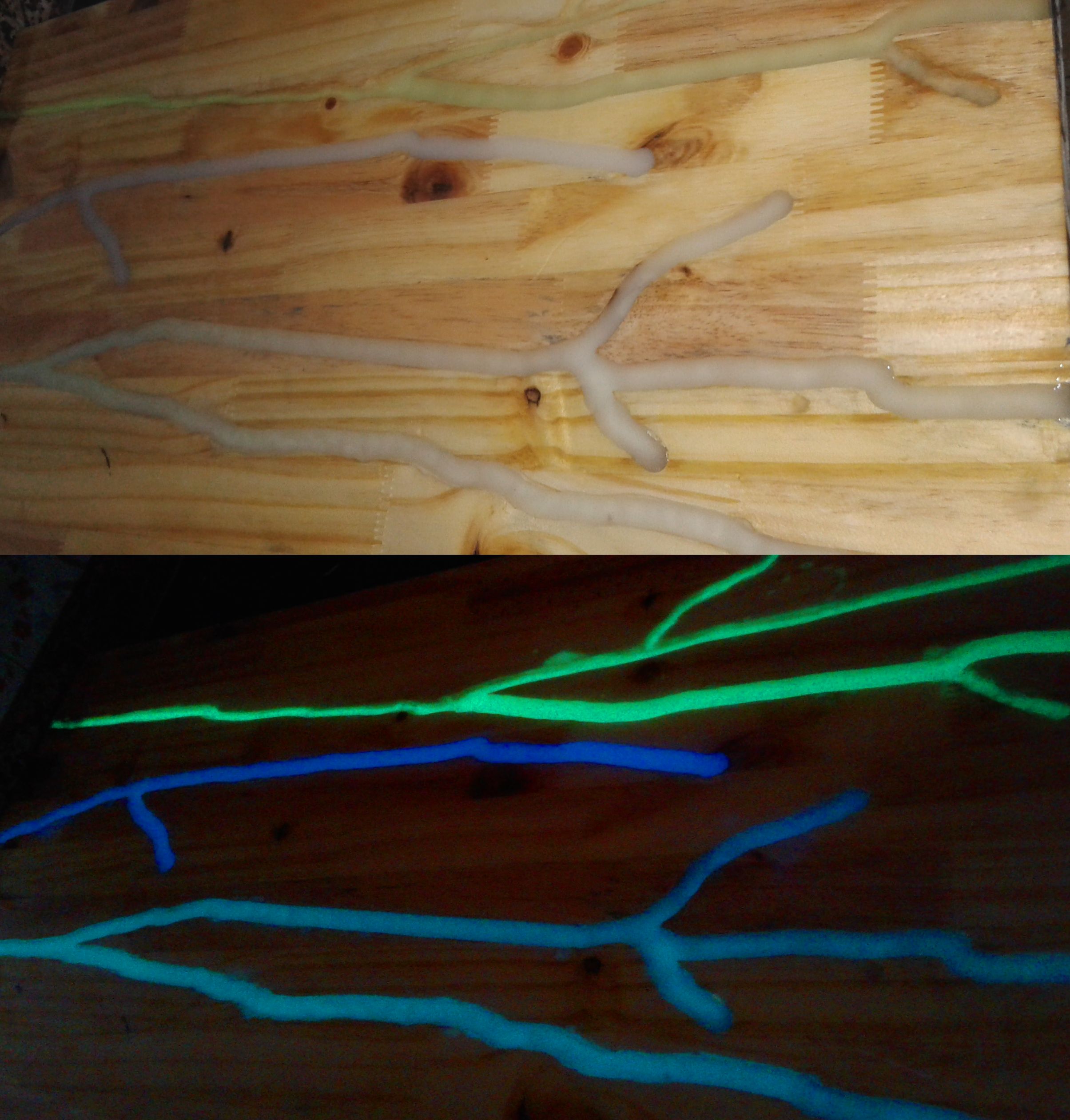
- Photoluminescent signalisation
- PHOTOLUMINESCENT BAND LLL
- Phosphorescent paints
- FLUORESCENT PAINTS
- BLACKLIGHT PAINTS
- PHOSPHORESCENT TAPES
- DECORATION
- PHOTOLUMINESCENT EMERGENCY EXIT SIGN
- SWITCHES
- STAIR NOSING
- PHOTO PAPER
- PHOTOLUMINESCENT ADHESIVE FILM
- RETRO REFLECTIVE TAPE
- Retroreflective paint
- PANEL PVC, ALU STEEL
- INFRARED INK AND X-RAY
- Phosphorescents Stones
- PRIMERS AND CLEARCOATS
- Luminescent road and cycle path
- Photoluminescent adhesives
- PHOTOLUMINESCENT PIGMENTS
- Fluorescents pigments and dyes
- Epoxy Resins and "River Table"
- Spraygun and airbrush
- Accessories
- Tactile signalization
- Protective Equipment
- Phosphorescent Papyrus
- Phosphorescent gems, pearls and jewellery
- Special effects paints
- Screen printing inks

European regulatory framework
At European level, Directive 2004/54/EC sets out the requirements for safety signage, in particular phosphorescent safety signs in tunnels longer than 500 metres. These regulations apply to both road and rail tunnels, given the specific risks they present under normal conditions and, even more so, in the event of an accident or fire.
Tunnels are particularly vulnerable infrastructure due to a combination of factors: high levels of darkness, a high degree of confinement, and often long evacuation distances. These constraints mean that any failure of the lighting or electrical system could have potentially serious consequences for users.
Phosphorescent signage and evacuation in tunnels
In a tunnel, an emergency can very quickly lead to people becoming disoriented, panic setting in, and serious consequences in terms of loss of life. It is therefore essential to provide users with clear, legible and immediately understandable visual information, enabling the quickest and smoothest possible evacuation.
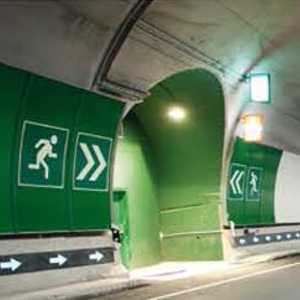
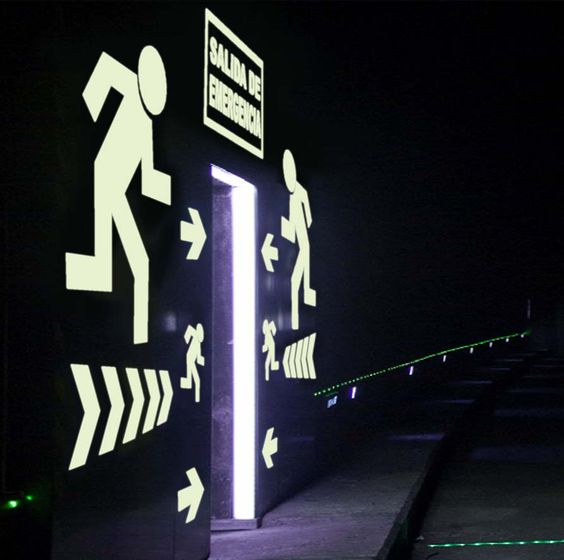
In the event of a total power failure, photoluminescent signage becomes the only truly operational solution for providing visual guidance in the dark. It reliably indicates:
the direction of emergency exits,
access to emergency call points,
the location of fire-fighting equipment.
Extreme environments and technical requirements
Tunnels are classified as extreme environments. The signage installed there must therefore meet stricter requirements, both in terms of mechanical strength and photoluminescent performance. The equipment must maintain high luminance over time, even in low or irregular lighting conditions. To this end, ARCO IRIS develops and manufactures a specific range of photoluminescent signs and panels designed for tunnels, made from aluminium or stainless steel, and offering very high levels of photoluminescence, corresponding to classes D, E, F or G.
What types of phosphorescent signs should be installed in a tunnel?
Photoluminescent signs must convey a range of essential information, without being exhaustive, in order to meet all safety and wayfinding requirements.
In particular, they must indicate:
the direction of the exits and the distance to them,
the location of fire-fighting equipment and emergency telephone points,
the location of safety niches, accompanied by multilingual instructions,
refuge areas, as well as door numbering,
and, optionally, photoluminescent markings at the bottom, complementing the main system.
Specific properties of phosphorescent evacuation signs in tunnels
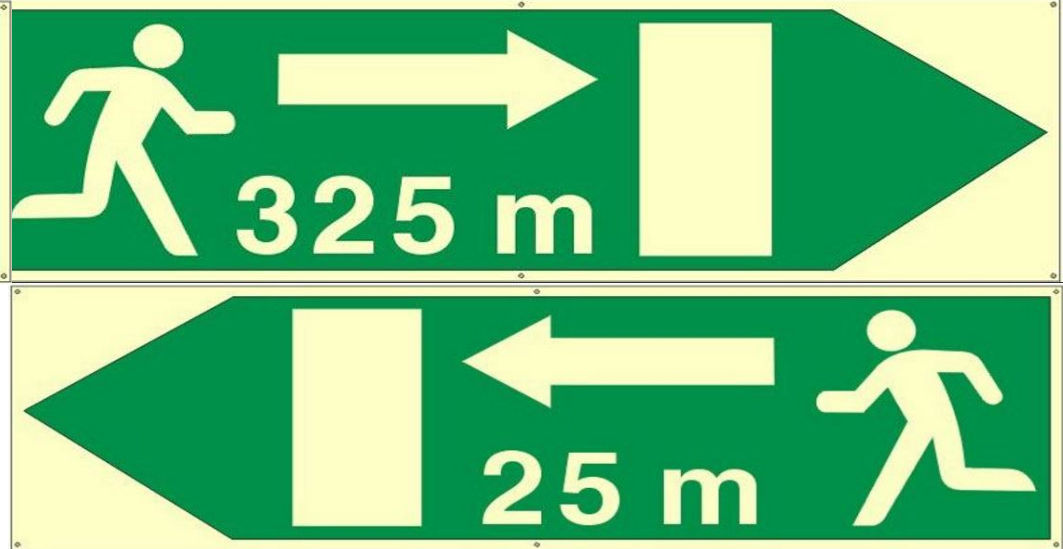
Evacuation signs must be installed in accordance with a precise, standardised layout. They must be positioned at regular intervals of 25 metres, fixed directly to the tunnel walls at a height of between 1.10 m and 1.50 m. Each evacuation sign must clearly indicate the distance to the two nearest exits, in both possible directions: left and right. This dual information is essential to enable users to choose the quickest escape route.
Directional signs may be arranged in two ways:
side by side, on the same plane,
or one on top of the other.
These configurations ensure optimum visibility, regardless of the tunnel layout or the users’ viewing angle.
Installation of phosphorescent panels
The method used to fix the signs depends on their function and location.
Depending on the circumstances, the signs may be installed:
facing the walls,
hanging vertically (perpendicular to the wall),
or in a bidirectional angled configuration, so that they are visible from multiple vantage points.
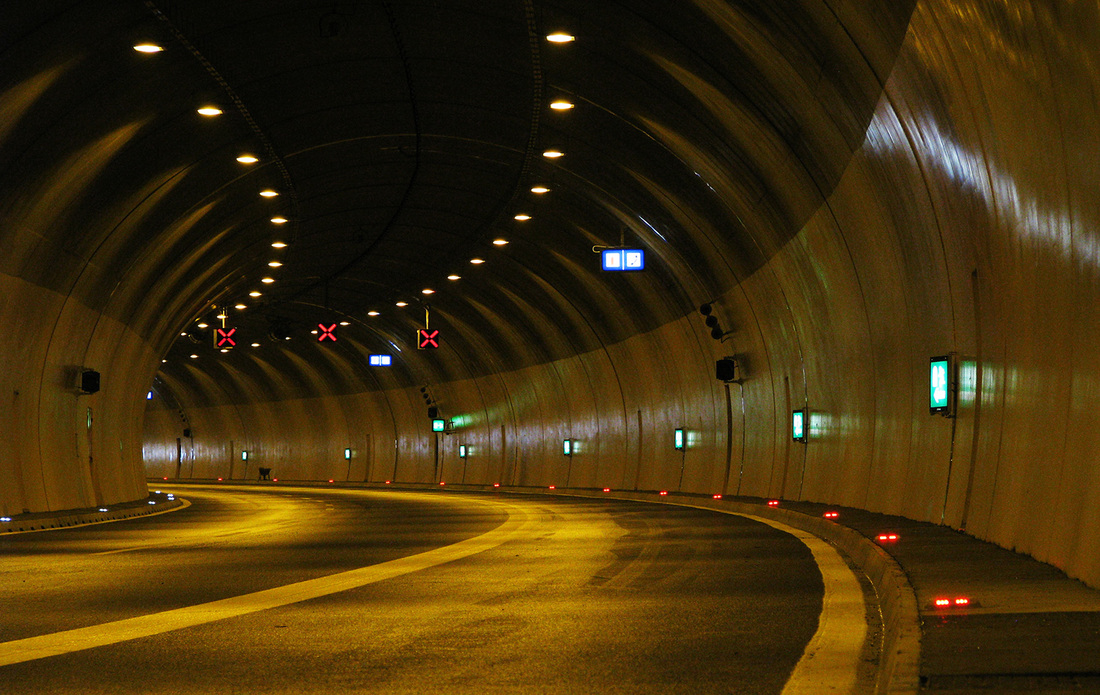
This type of installation ensures that information remains clearly visible at all times, even in curved areas or where visibility is limited.
ARCO IRIS phosphorescent products for tunnels
Photoluminescent aluminium panels
The panels designed for tunnels are made from an aluminium sheet coated with a photoluminescent epoxy coating. The minimum thickness of these panels is 1.1 mm, ensuring excellent rigidity and high durability. Under normal conditions, the panel appears yellowish; in the dark, it emits a characteristic green light. Luminance levels comply with ISO 17398 and exceed French regulatory requirements, with a minimum class D rating.
For reference, Class D corresponds to :
a luminance of 285 mcd/m² after 10 minutes,
37 mcd/m² after 60 minutes,
with a decay time of 3200 minutes.
Upon specific request, ARCO IRIS can produce panels meeting Class E, F or G standards, as well as custom-cut panels up to 120 m × 100 cm. A stainless steel version is also available for even more demanding environments.
Durability and longevity
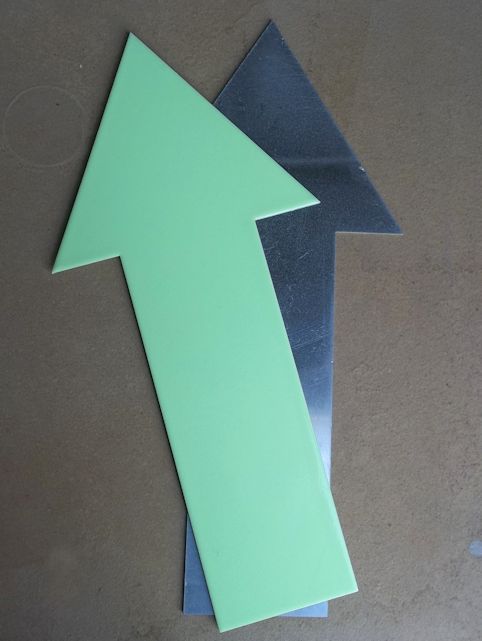
Aluminium photoluminescent panels offer high photoluminescence performance, ensuring effective illumination even under the low light levels typical of tunnels. The epoxy coating is highly waterproof and offers excellent resistance to a wide range of aggressive factors: water, salts, fumes and leaching. It allows for easy cleaning, minimises soiling and is resistant to all standard cleaning agents. Compared to PVC panels, the aluminium versions offer a longer service life and significantly greater robustness, making them particularly well-suited to the demands of underground infrastructure.
Light conditions and loading conditions
How can we ensure sufficient light for charging?
Vehicle headlights provide some of the light required to charge photoluminescent devices. However, this alone is not enough.
It is therefore essential to position the panels as close as possible to existing light sources in order to optimise their charging capacity and ensure effective luminance in the event of a power cut.
Pictograms in accordance with EN ISO 7010
Arco Iris-approved and certified products
Installation and viewing distances