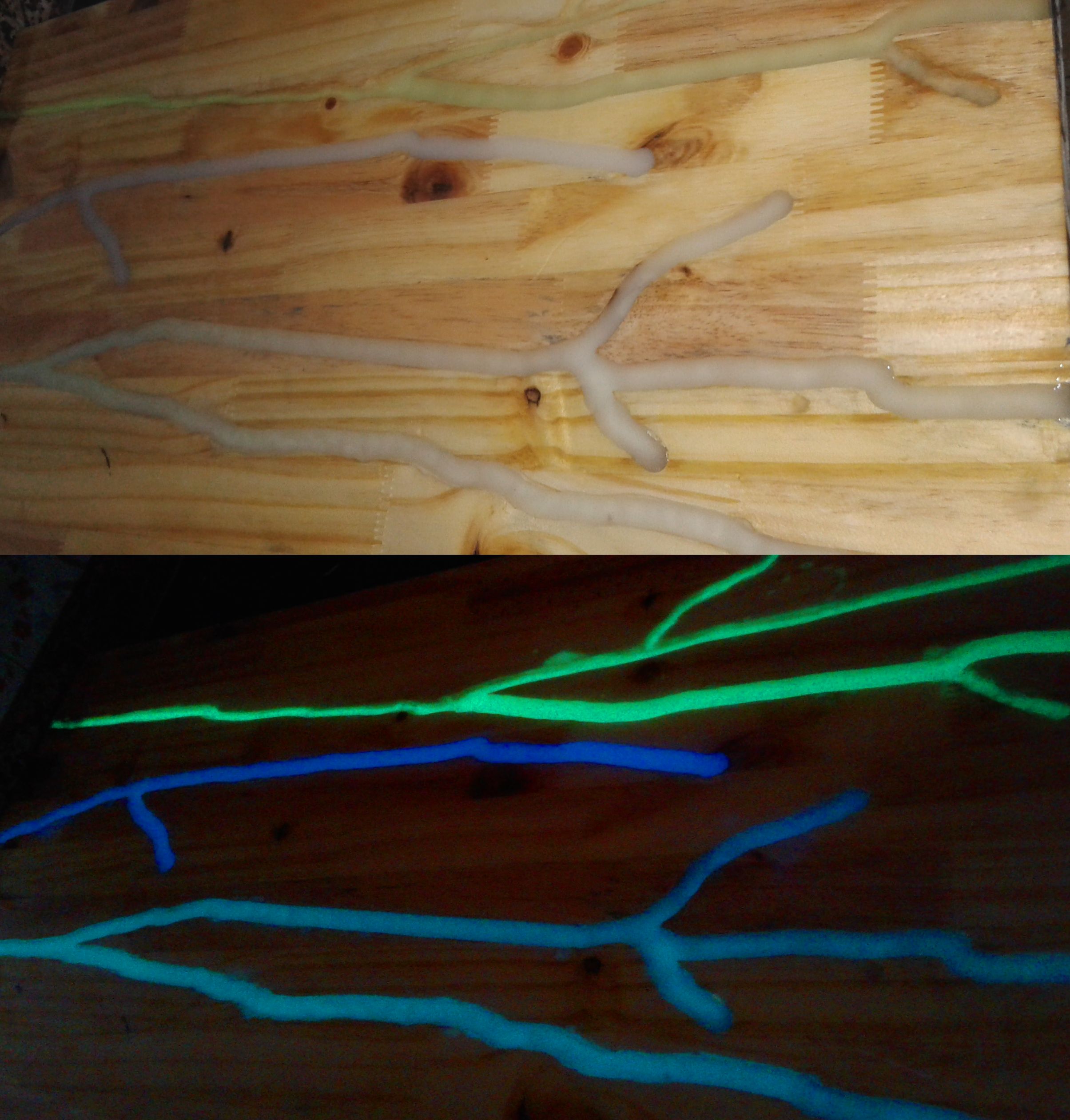
- Photoluminescent signalisation
- PHOTOLUMINESCENT BAND LLL
- Phosphorescent paints
- FLUORESCENT PAINTS
- BLACKLIGHT PAINTS
- PHOSPHORESCENT TAPES
- DECORATION
- PHOTOLUMINESCENT EMERGENCY EXIT SIGN
- SWITCHES
- STAIR NOSING
- PHOTO PAPER
- PHOTOLUMINESCENT ADHESIVE FILM
- RETRO REFLECTIVE TAPE
- Retroreflective paint
- PANEL PVC, ALU STEEL
- INFRARED INK AND X-RAY
- Phosphorescents Stones
- PRIMERS AND CLEARCOATS
- Luminescent road and cycle path
- Photoluminescent adhesives
- PHOTOLUMINESCENT PIGMENTS
- Fluorescents pigments and dyes
- Epoxy Resins and "River Table"
- Spraygun and airbrush
- Accessories
- Tactile signalization
- Protective Equipment
- Phosphorescent Papyrus
- Phosphorescent gems, pearls and jewellery
- Special effects paints
- Screen printing inks


When installing a photoluminescent guidance system of the LLL (Low Level Lighting) type, the continuity of the photoluminescent stair-nose markings is a fundamental principle. The markings must not be interrupted under any circumstances, including when there is a change in level or floor. Staircases, their steps, handrails and landings must therefore be marked in accordance with uniform, identical and consistent rules throughout the building, in order to ensure that the route remains clearly visible at all times, regardless of visibility conditions.
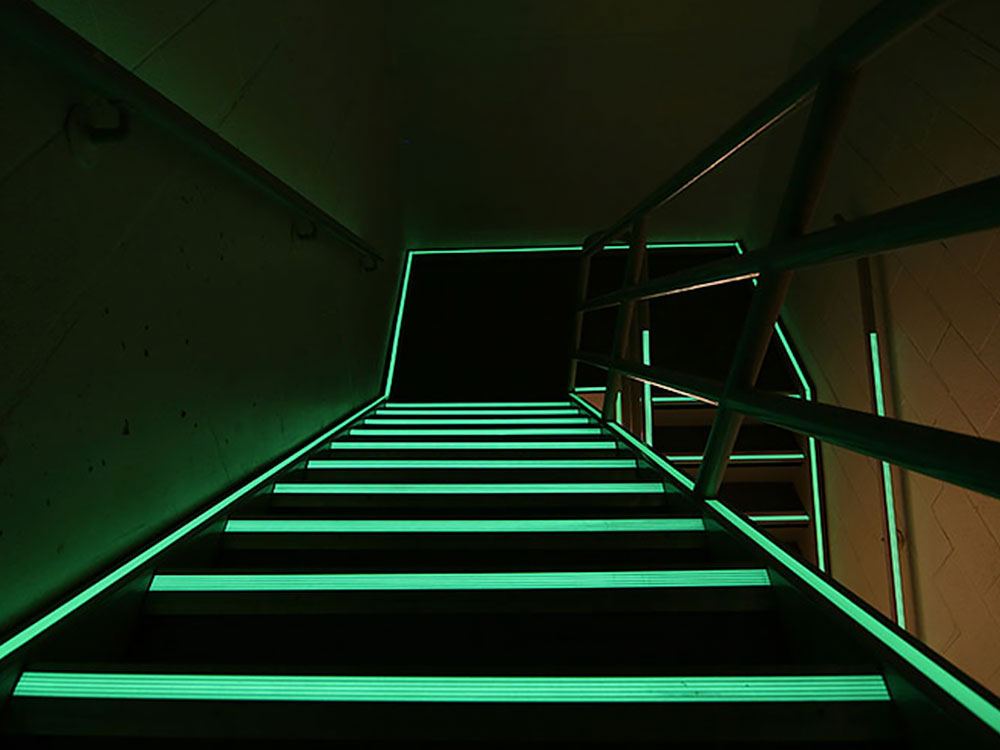
Glow-in-the-dark stair markings
The main aim of this type of signage is to ensure clear and intuitive wayfinding for users, particularly in the event of a lighting failure or an emergency, whilst enhancing safety during vertical movement.
The steps
Photoluminescent strip marking on the front
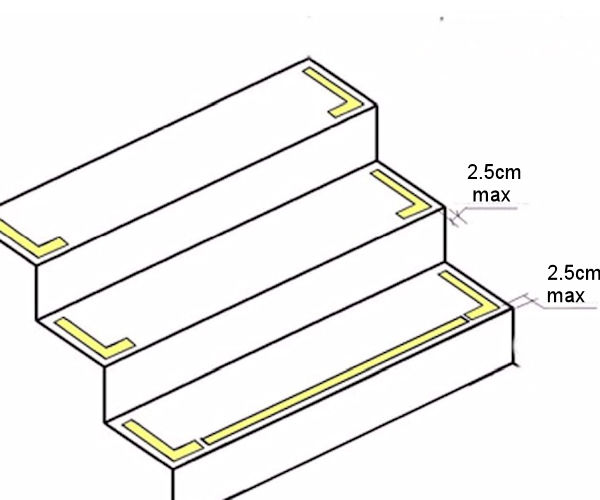
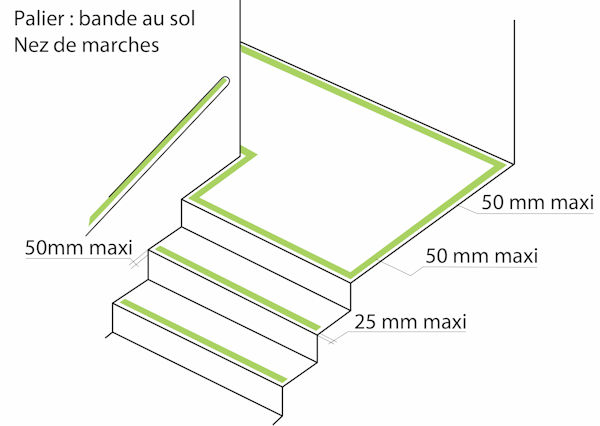
Each stair tread must be fitted with a continuous linear photoluminescent strip. This strip must be between 20 mm and 50 mm wide and must be installed along the entire length of the tread. A maximum offset of 5 cm at the end of the tread is permitted to accommodate structural or aesthetic constraints. The strip must be laid parallel to the stair nosing, at a maximum distance of 25 mm from it. This positioning ensures that the depth of the step is immediately apparent and reduces the risk of falls, particularly in dark environments. As an alternative or in addition, the use of a photoluminescent stair nosing is permitted. This type of fitting significantly improves the visibility of the step profile in the dark. It also provides mechanical protection for the stair nosing and may incorporate anti-slip properties, thereby contributing to the overall safety of the staircase.
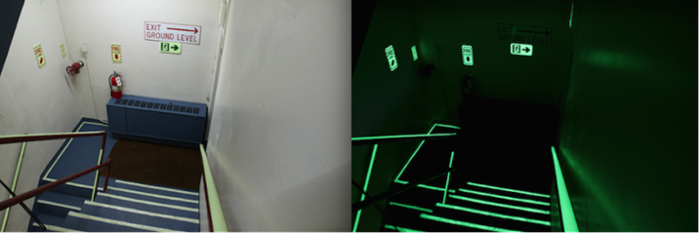
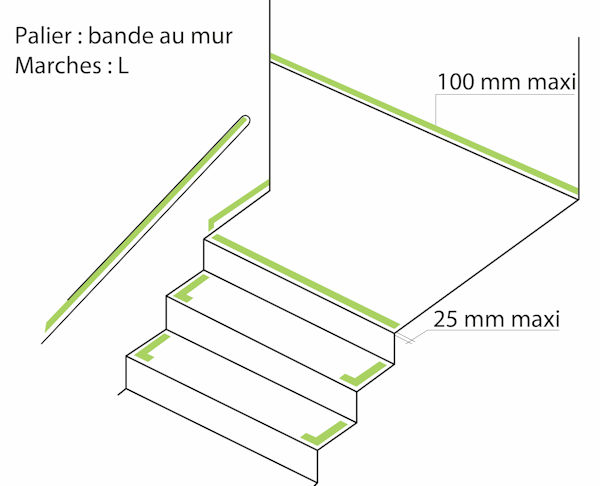
Signage using photoluminescent L-shaped markers
Another solution is to fit the steps with L-shaped photoluminescent markers, positioned on the left and right corners of each step. However, this configuration is limited to staircases with a total width of less than 2 metres. The dimensions of these markers must comply with the requirements set out in standard NF X 50-080-2, ensuring sufficient visibility and standardised recognition of the markings. This method allows the steps to be clearly identified whilst remaining discreetly integrated into the existing architecture.
Handrails
Handrails must also be fitted with photoluminescent markings. This is achieved by applying a luminous strip at least 25 mm wide to the top of the handrail.
The marking must be continuous, without excessive interruptions. A break is permitted, but must not exceed 10 cm under any circumstances. This visual continuity is essential to enable people to follow the handrail naturally as they move along, particularly in conditions of reduced visibility.
The landings
In the context of a lifelong learning pathway, landings play a key role in the transition between levels. It is essential to clearly mark the transition from a landing to a flight of stairs, as well as the point where a flight of stairs leads onto a landing.
To achieve this, a continuous photoluminescent strip must be installed on the floor or on the lower part of the wall. This marking must run the full length of the first and last steps, both when ascending and descending. This arrangement allows the entrance or exit of the staircase to be identified immediately, regardless of the direction of traffic.
Each change of floor must also be marked by the installation of a photoluminescent information and directional sign. This sign must clearly display the following:
the name of the staircase,
the floor number,
the direction to follow.
These road signs complement the road markings and help guide road users.
Requirements applicable to stair nosings
When used in photoluminescent marking systems, stair nosings must meet several strict criteria. Firstly, they must provide a clear visual contrast with the rest of the staircase to ensure a distinct separation between the tread and the riser. This contrast is essential for ensuring a clear perception of spatial depth.
Furthermore, stair nosings must have anti-slip properties to minimise the risk of slipping, and must not protrude excessively beyond the riser. Excessive protrusion could, in fact, create an additional hazard rather than improving safety.
Consistency and continuity of the system
All these requirements are designed to ensure the overall consistency of the photoluminescent signage. All elements — steps, handrails, landings and information panels — must be designed as a single, continuous system, without any visual breaks or inconsistencies in their placement.
This principle ensures that the route is intuitive to follow, facilitates evacuation in an emergency and ensures compliance with the safety requirements applicable to photoluminescent guidance systems in buildings.