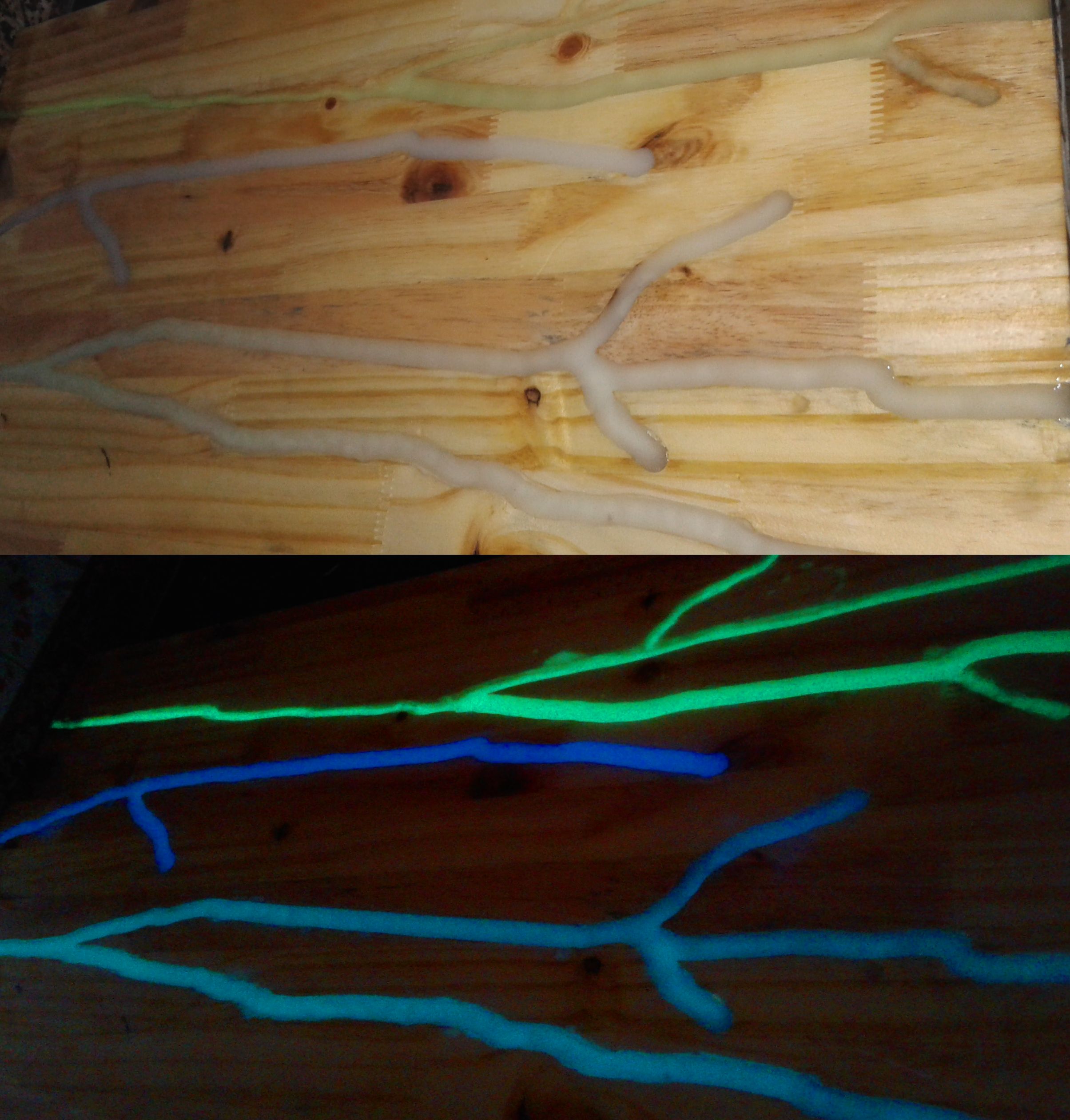
The drop-down menu below will help you select complete rolls of 25sqm or cut to size per sqm, in different luminance classes.
OUR MATERIALS ARE CERTIFIED AND MEET EUROPEAN STANDARDS (NF X08 050 - 1 2 3): Laboratory test reports (from SGS) available on request. |
Luminance/Abrasion/Adhesion/Permeability (immersion test)/ Abrasion and friction/Resistance to chemical cleaning/Flammability/Smokes > Refer to the PDF technical data sheet on this page |
 Product tested and certified by SGS
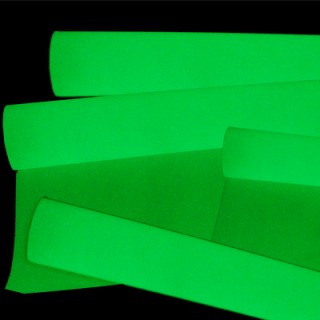
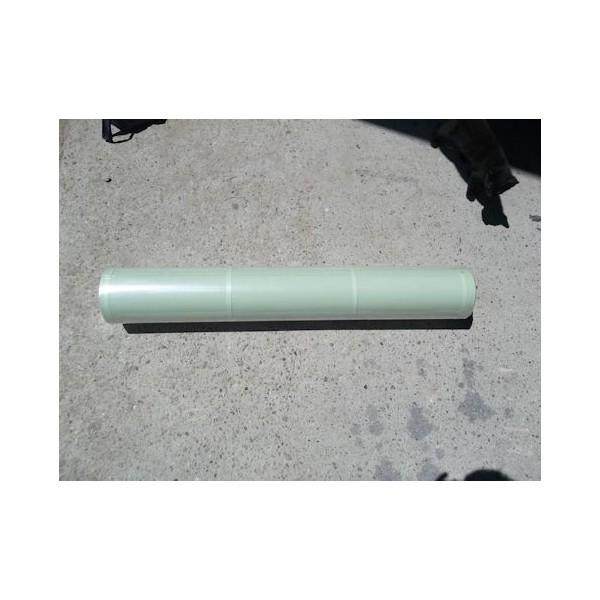
PHOTOLUMINESCENT ADHESIVE FILM ROLL (VINYL PVC)
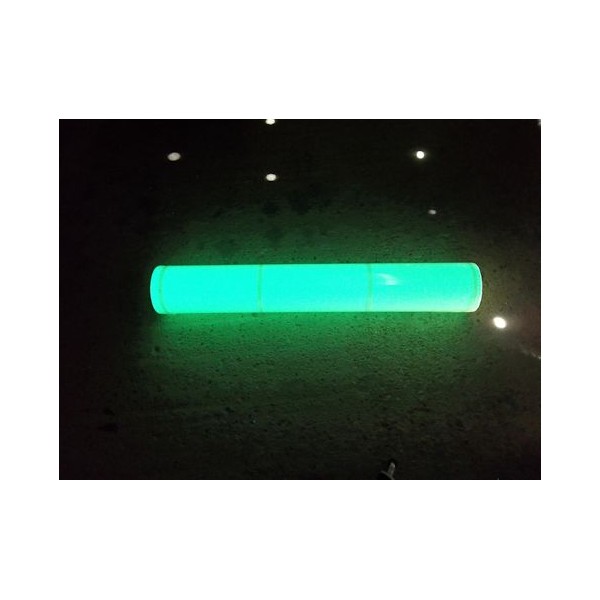
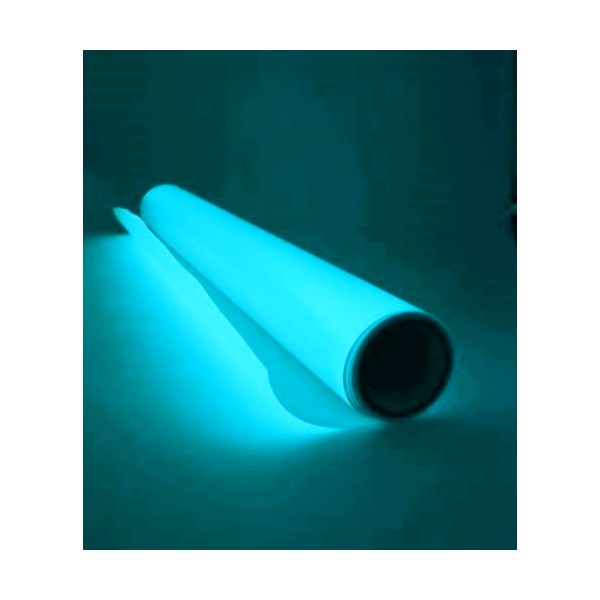
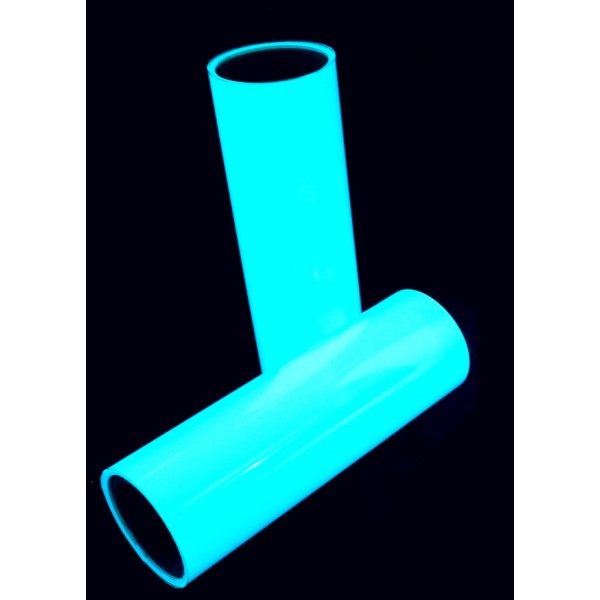
The photoluminescent adhesive films glow in the dark through their natural phosphorescence property (synonym: photoluminescence)
How is this reaction operating?
The phosphorescent molecules are excited by all types of luminous energy, and release a delayed emission of light.
The phenomenom has an almost limitless service life.
DESTINATION: Signaling preparation (emergency exits, fire extinguishers, arrows, warnings) by printing and cutting.
COMPOSITION:
Our films are made of PVC Vinyl, with an extremely tear resistant adhesive face.
Compared to PET films, they offer a better resistance to fire, and can safely be used outdoors or indoors.
However, for exterior use, we recommend our rigid materials, such as PVC and Metal panels.
LUMINANCE :
The luminance is the light emitted. Remanence is the light that is restored over time.
Our photoluminescent adhesives are compliant with European standards regarding photoluminescence level (class C). Our other films (D and E) have higher performances.
For information, a class C adhesive can stay visible all night in total darkness.
Vinyl Luminance Measurements Adhesive PVC
Class C: 10 minutes = 211mcd / m2, 60 minutes = 30mcd / m2;
Class D: 10 minutes = 295mcd / m², 60 minutes = 36mcd / m2;
Class E: 10 minutes = 505mcd / m2, 60 minutes = 69mcd / m2 |
APPEARANCE:
Colour during the day: Greenish white/Colour during the night: Green
DIMENSIONS:
- 100cm x 25m (also available in 10m)
- Cutting per square meter
WARNING !
Do not cut with laser! PVC contains chlorine. In response to the laser, a highly toxic chemical compound gas can be formed.
How to avoid the formation of wrinkles on the unwound film?
This problem can occur when:
> there is a difference between the voltage of the photoluminescent PVC layer and the support layer. If the environment is drier, the humidity of the release paper decreases, the release paper will be shortened, causing wrinkling on the bi-layer material. If the environment is too humid, the result release paper being elongated, it can also produce a pleated delamination.
> Avoid the film roll remaining loose after use: use a fixative, an adhesive, a rubber band, and cover with a plastic bag to avoid this problem.
> if the material is cut, it is suggested to leave it flat or to roll. Do not keep the film standing on the ground.
> When winding, it is advisable to keep the same winding diameter.





 panels and Adhesive