Definitions
In English, this is called a "binder"; in French, we refer to it as a binding agent, medium, resin, or fixative. It refers to the same transparent substance that binds together fluorescent pigments, or any other colorants, pigment pastes, or pearlescent particles to create paint. Paint is a mixture of a binder and a colorant.
Characteristics
Acrylic mediums can be considered varnishes because they are transparent and form a durable, protective finish—either glossy or matte—over the underlying layers of paint.
Acrylic medium binders are generally white when wet. Depending on the type of resin used, they may have a very slight yellowish tint. After drying, they become completely colorless and transparent.
The binder consists of a volatile component (water), which evaporates during drying, and a solid component, which forms the dry film of the paint.
Use
The medium forms the base of the paint, holding the different types of pigments or fillers together, both before and after drying.
The 6 binders listed on this page are thick formulations that can be applied with a brush, with the exception of formula 8314, which is more fluid.
The binder ensures that the powdered pigments adhere to the substrate (paper, cotton fabric, lycra, cardboard, etc.).
An acrylic medium must be transparent or colorless to be neutral and not alter the colors of the pigments added to it.
A binder, medium, or fixative must be transparent to allow light to pass through (in the case of fluorescent or phosphorescent paints).
Our various transparent acrylic mediums
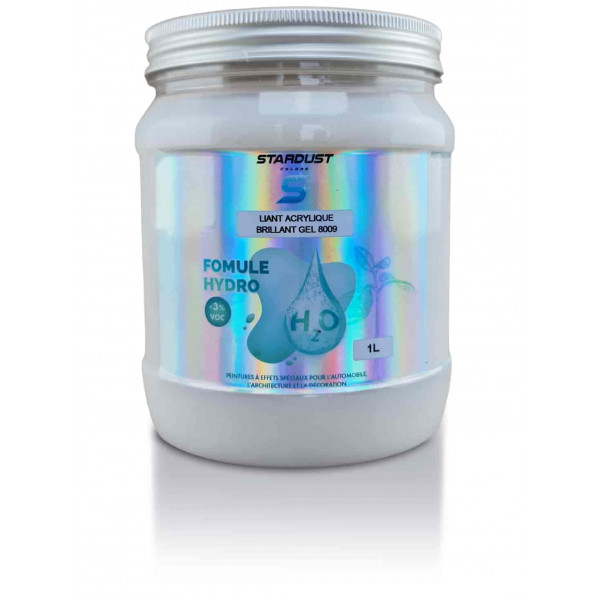
►Glossy Gel Medium 8009: Thick, excellent value for money, high gloss, high thixotropy*, and excellent coverage
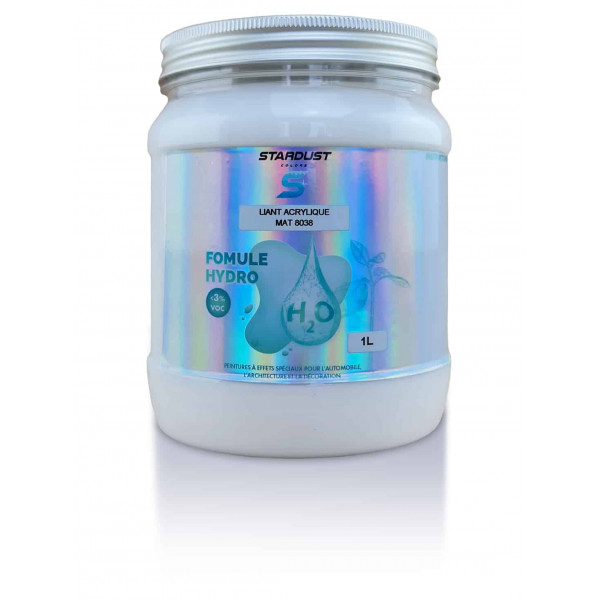
►Matte Acrylic Medium 8038: High-quality binder, low gloss (10° on a scale of 100), thick texture, low flow, easy to use
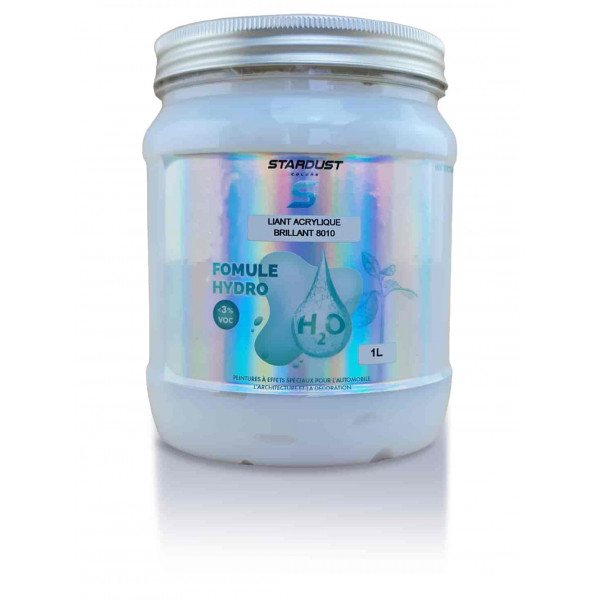
►Glossy Medium 8010: Excellent gloss level (70°/100), good viscosity, easy to work with and pleasant to use
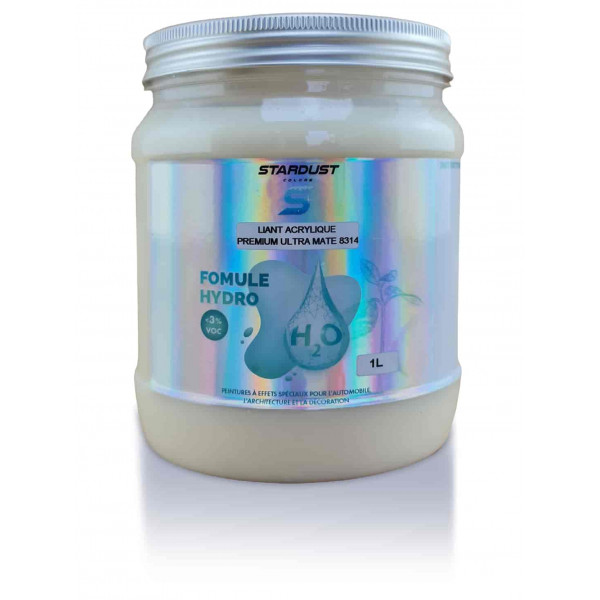
►Premium Ultra-Matte Liquid Medium 8314: Very high-quality binder, low viscosity, fluid, high resistance after drying, 4° gloss, suitable for use with spray guns and airbrushes
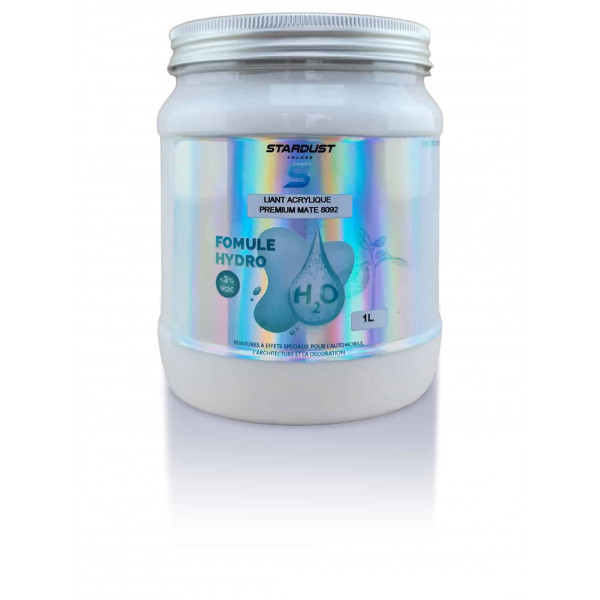
►BINDEX Premium Matte Acrylic Binder Medium 8092: Creamy texture, high thixotropy, ultra-matte (<4°), rich, excellent pigment-holding capacity, pleasant to work with
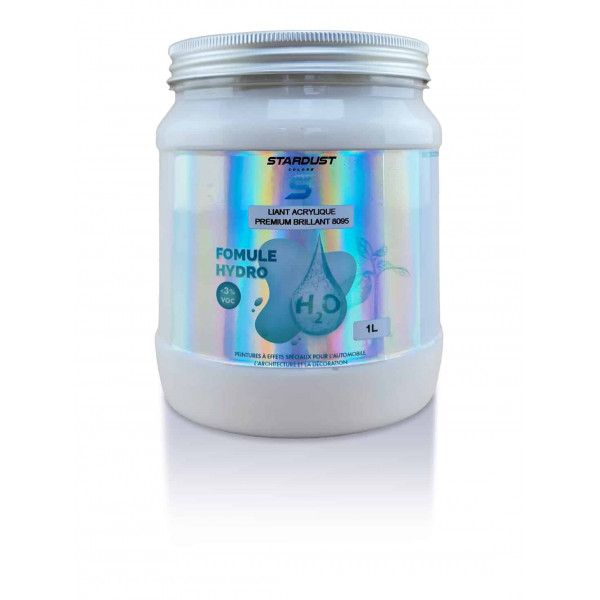
►BINDEX Premium Glossy Acrylic Binder Medium 8095: The glossy version of this amazing binder, rich and creamy texture, high thixotropy, excellent pigment-holding capacity
* thixotropic: This refers to a property of certain resins that allows them to retain their shape after application. Some acrylic mediums flow and become smooth, while highly thixotropic mediums can maintain their thickness and the texture created during application, such as the strokes of a brush or spatula.
When creating your own phosphorescent paint, what percentage of pigment should you use?
The amount of pigment is determined by weight per kg, or as a percentage of the total mixture:
approximately 15 to 30% by weight.
Phosphorescent pigments are heavy, so it's important to use a thixotropic binder.
If you add too much pigment, there is a risk of cracking and a grainy surface after drying.
Which pigments can be used with which acrylic binders?
Our water-based pigments can be used with all our binders: 8092, 8095, and 8009.
Our acrylic mediums are also suitable for mixing with our fluorescent pigments.
How do you dilute different mediums?
For acrylic binders, you can use between 5% and 20% water.
Note that adding too much water can negatively affect the strength, adhesion, and drying time of the acrylic medium.
Can I wash the fabric after using the different adhesives?
Yes, our adhesives are flexible and durable. The durability depends on the temperature, detergent used, and the length of the machine wash cycle.
The best adhesive for fabric is the 8314 liquid adhesive, due to its flexibility and strength.
Composition
All our acrylic binder mediums are formulated with acrylic resin (styrene-acrylic copolymer emulsion)
Lifetime
Air and heat are two factors that can affect the shelf life of acrylic mediums. To ensure they remain usable for longer than 6 months after opening, it is important to keep the containers tightly closed and to avoid exposing them to heat.