



Home
Subcategories
-
Photoluminescent signalisation
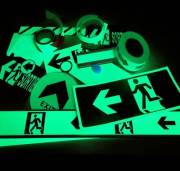
This signage section brings together a selection of the types of phosphorescent products that are amongst the most widely used and in greatest demand, available on our website and primarily intended for safety signage. These products meet the essential needs for wayfinding, guidance and information in low-light conditions or total darkness. In the other categories on the website, you can find a wider range of products, including more product codes, size options, photoluminescence levels and specific colours. Photoluminescent signage is mainly used in indoor spaces, such as public, industrial, commercial and residential buildings. Photoluminescent materials prove particularly effective in these settings, as they store ambient or artificial light and release it instantly as soon as the lights go out. The use of guide strips, directional arrows, pictograms, safety instructions and phosphorescent signs offers several major advantages: excellent visibility in the dark, simple and cost-effective installation, no need for a power supply, no maintenance, and a very long service life, often considered to be unlimited under normal conditions of use.
Materials used for photoluminescent signage
Photoluminescent signage can be manufactured from various materials, each meeting specific technical, mechanical or environmental requirements. The most common substrates are rigid or flexible PVC, anodised aluminium, stainless steel, polycarbonate, PMMA (Plexiglas), and high-performance technical adhesive films. PVC is widely used due to its light weight, ease of cutting and cost-effectiveness. Aluminium and stainless steel are preferred for demanding environments, such as industrial settings or those subject to high mechanical and thermal stresses. Adhesive photoluminescent films, meanwhile, allow for quick installation on floors, walls, doors or existing equipment, without the need for major building work.
Standards applicable to photoluminescence
Photoluminescent signage is governed by several international and European standards, which guarantee its performance, legibility and durability. Key standards include ISO 17398, ISO 16069 and ISO 7010, as well as DIN 67510 and DIN 67520, which define luminance levels, afterglow duration and measurement methods. In the building and fire safety sectors, photoluminescent signage is also incorporated into regulatory requirements relating to evacuation plans, escape routes and personal safety. Compliance with these standards is essential to ensure that installations meet the relevant requirements and are approved by inspection bodies and the competent authorities.
Workplace signage (Directive 92/58/EEC)
Governed by Directive 92/58/EEC, workplace signage aims to inform and protect workers from occupational hazards using clear, standardised signs. From a photoluminescent perspective, this signage is particularly effective as it ensures permanent visibility, even in the event of a power cut or an emergency response. Photoluminescent signs, floor markings, emergency exit indicators and route markings enable rapid and intuitive navigation within workshops, warehouses, technical rooms or high-risk areas. Charged by ambient light, these devices emit a long-lasting glow without the need for an electrical supply. They effectively complement the conventional signage required by Directive 92/58/EEC, whilst enhancing safety, regulatory compliance and the reliability of workplace installations.
Phosphorescent safety equipment: advantages and limitations
The advantages of photoluminescence are numerous and objective: Phosphorescent safety equipment – enables passive operation without power, total reliability in the event of a power cut, immediate visibility, no maintenance costs and a reduced environmental impact. It is a particularly suitable safety solution in high-risk or high-traffic areas. However, certain limitations must be clearly identified. The effectiveness of photoluminescent materials depends directly on the quality and duration of their light charging. Insufficient exposure to light reduces the luminance emitted. Furthermore, outdoors or in environments heavily exposed to UV radiation and the elements, photoluminescence may lose its effectiveness over the long term, unless materials specifically designed for these conditions are used.
Bespoke phosphorescent safety signs and customisation with ARCO IRIS SAS
With ARCO IRIS SAS, it is possible to go well beyond standard products when it comes to phosphorescent safety signs. The company designs and manufactures fully customised photoluminescent signage, tailored to the technical, aesthetic and regulatory requirements of each project. Bespoke solutions can incorporate different materials, printing processes (screen printing, digital printing, engraving), specific formats, specialised fixings and various levels of photoluminescence in accordance with the required standard classes. This approach enables us to precisely meet the needs of industrial sites, public access buildings, public infrastructure or complex architectural projects, whilst ensuring compliance, performance and durability.
Phosphorescent evacuation signage
In buildings, factories or warehouses, phosphorescent evacuation signage is a safety device designed to guide people towards emergency exits in the event of poor visibility or a power cut. It comprises photoluminescent elements positioned at floor level: floor markings, wall strips, stair nosings or directional signs. Charged by ambient light, these devices emit a glow visible in the dark, enabling smooth and instinctive movement without relying on an electrical power source. Particularly effective in emergency situations, phosphorescent guidance helps to minimise panic, reduces the risk of falls and speeds up evacuation. Reliable, durable and maintenance-free, it is an essential solution for building safety.
Phosphorescent materials
Phosphorescent decoration
Phosphorescent paint
Phosphorescent tape -
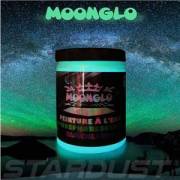
Phosphorescent paints
There are many types of professional, decorative and sprayable phosphorescent paints… Among the types of phosphorescent products, phosphorescent paint is the most versatile option as it is suitable for ‘all applications’. However, in the field of signage, it is also the most demanding solution in terms of application and labour.
The specific characteristics of phosphorescent paint meet a range of needs: The products manufactured by Arco Iris® are professional-grade, very high-quality paints based on strontium aluminate, designed to produce the maximum luminous and afterglow effect. Our paints are colourless in daylight and are best applied to a white background.
- the method of application (spray gun, airbrush, brush, pouring)
- the specific resistance
- the intended use (floors, outdoors, automotive, fabric, walls, paper)
As the leading company in France since 2009, we have developed products for some of Europe’s largest companies.
We manufacture 7 types of photoluminescent paints, which you can discover at the bottom of this page: all the products below are in stock in various sizes and colours.
HOW TO CHOOSE?
- depending on the application method (roller, brush or spray gun)
- depending on the intended use (interior, exterior, wood, vehicle bodywork, etc.)
- depending on the desired properties (durability, water resistance)
- depending on health and safety considerations: water-based paints are safer to use.
Phosphorescent paint
Here are some explanations and tips for achieving maximum brightness and afterglow with these special paints. The factors to consider are:
- Sufficient number of coats (at least 3)
- Use and observation in complete darkness
- Duration and type of light exposure
- Light background (white undercoat),
- Colour intensity (colours exhibit different levels of brightness)
- Temperature (heat enhances the effect, whilst cold inhibits it)
How long does phosphorescent paint glow for?
Bright colours such as turquoise and green charge very quickly and can glow for over 10 hours. Their brightness will simply diminish over time.
The loss of effectiveness of phosphorescent paints over time is virtually negligible (excluding mechanical wear and tear), as the lifespan of phosphorescent products extends beyond several decades.
It is important to note that phosphorescent paints require total darkness to be fully effective: light pollution from street lighting in urban areas interferes with photoluminescence.
Questions about phosphorescent paint
It is an intriguing phenomenon, yet one that is easy to understand and master. It is also extremely simple to use. For very specific queries, you can also contact our technical department by email, or consult our practical guide which covers allquestions about phosphorescent paint: application surfaces, recharging, duration of effectiveness, etc...
Professional phosphorescent paint
In critical applications, where high durability and specific performance levels are required, professional phosphorescent paint is available in epoxy, polyurethane or acrylic formulations, with technical specifications designed for rigorous use, meeting relevant standards and contributing to personal safety.
Decorative phosphorescent paint
In the field of creative or artistic hobbies, decorative phosphorescent paint is used – with a brush, roller or airbrush – to incorporate the phosphorescent effect into decorative works. These are always consumer-grade products: non-hazardous and easy for anyone to use.
Phosphorescent materials
-
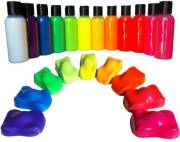
FLUORESCENT PAINTS
Fluorescent paints are included amongst the types of fluorescent products; we’re all familiar with them – they’re extremely bright and garish colours, commonly known as fluorescent yellow or fluorescent pink paint.
The terms are sometimes confused! In fact, fluorescent colours are not paints that glow in the dark, although they are capable of glowing when exposed to UV light. Fluorescent paint is extremely colourful and saturated; it is a special-effect paint belonging to the photoluminescent effects group.
Around fifteen shades occur naturally, and some of these are listed in the RAL colour charts (RAL 1026 yellow, RAL signal red 3024 and 3026, RAL 2004 and 2006 orange, or even RAL 6038 safety green).
We also produce a few other, rarer colours, such as lime green, white, purple, or even blue. Some of these colours can only be mixed, whilst others cancel out the luminous effect when mixed.
Fluorescent paint: how it works and how to use it
Have you ever wondered about the origin of this phenomenon of ultra-vibrant colours?
Have you ever even noticed that, in a given environment, such an object stands out clearly from its surroundings, being twice as visible?
Explanation: when struck by photons, their molecules react by emitting light themselves. This is why an object painted with ‘fluorescent’ paint reflects more light than it receives and therefore attracts our attention more than other objects in the visual environment.
We offer a wide range of fluorescent colours in water-based paint, fluorescent floor paint, marking paint and fluorescent airbrush paints. Using pigments, we produce all types of paints and inks to meet the specific needs of businesses. To order these to your specifications, please contact us.
Fluorescent acrylic paint
Based on water-based acrylic resins, the formula for fluorescent acrylic paint is non-toxic, odourless and very pleasant and easy to use. It offers excellent miscibility and a very appreciable drying speed. It is the ideal paint for all creative and leisure uses.
Fluorescent car body paint
This is a professional-grade product, typical of the car bodywork sector: fluorescent car bodywork paint is a solvent-based, ultra-fine, quick-drying paint, regarded by industry professionals as a primer for topcoats. It is primarily applied by spray gun onto a white primer and must be protected with an automotive-grade UV-resistant clear coat.
Industrial and marking fluorescent paint
Used in factories, industrial sites and high-security work areas, industrial and marking fluorescent paint is used on a permanent or temporary basis, primarily to mark and signal a hazard. Applied to walls, floors or even obstacles or machinery, it provides an effective visual signal to ensure workers’ safety.
Invisible fluorescent paint
This is the most specialised type of fluorescent paint, as it is completely colourless outside its ‘excitation phase’. When exposed to ultraviolet light, invisible fluorescent paint reacts instantly and becomes both coloured and luminous. This effect is particularly noticeable in dim light or darkness.
Fluorescent signalling equipment
Fluorescent markers
Fluorescent clothing and fashion
-
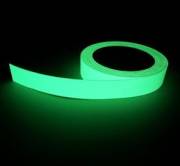
PHOSPHORESCENT TAPES
Phosphorescent tapes are among the most important phosphorescent products in our range. Click on the product pages below to view the variants and details for each type of tape. Self-adhesive PVC vinyl phosphorescent tape, supplied in rolls, or flexible aluminium phosphorescent tape sold by the metre, for sticking to any smooth surface (floors, walls, equipment).
Among the items we offer, photoluminescent tapes represent the best value for money:- - Most are highly photoluminescent: generally, the brightness of a tape is equivalent to 6 coats of photoluminescent paint
- - They can be applied instantly and easily
- - They provide photoluminescent signage that complies with standards.
Phosphorescent tape
How phosphorescence works: (Phosphorescence is synonymous with photoluminescence) Our tapes absorb any type of light, even the faintest, store this energy and react by emitting phosphorescent light, which is released over the course of minutes and hours. This is the phenomenon of photoluminescence.
The effectiveness of some of our photoluminescent strips lasts for over 12 hours. As for the strips’ performance, they can remain fully functional for over 10 years without any issues.
Stock: All our phosphorescent strips are in stock and are delivered in France or across Europe within 24–48 hours. Effectiveness: Durable and suitable for both indoor and outdoor use, our phosphorescent strips are generally more effective indoors for signposting and marking. As with all phosphorescent products, complete darkness is required. This is often impossible in the presence of street lighting.
Tips: Phosphorescent strips are generally applied to skirting boards rather than directly onto the floor. They can also be placed on handrails.
Installation: All our phosphorescent tapes are self-adhesive. They feature a self-adhesive backing protected by a peel-off strip. It is advisable to apply them to a smooth, sound and dry surface. Once applied, they are difficult to remove.
Technical data sheet and quality certification
The ‘adhesive tape’ type photoluminescent signage products offered in this category are accompanied by comprehensive descriptions, particularly for photoluminescent adhesive tapes in Classes C to E. These flexible and highly durable vinyl tapes provide guidance in all lighting conditions. They are generally used and applied in ‘low-level’ areas, i.e. on smooth floors, walls, handrails or corners. They are frequently referred to as LLL-type equipment (Luminescent Link Lines in French, or originally from the English ‘low location lighting’).
The base material of the phosphorescent tape is PVC vinyl, which provides the following properties: very good overall strength, flexibility and elasticity.
Durability tests (SGS tests) are carried out to demonstrate excellent resistance to tearing, UV radiation, leaching, water, abrasion and ignition.
Phosphorescent signage products with a Class C (or higher) phosphorescence rating comply with the ISO 17398 standard.
Performance ratings of C, D or E indicate both levels of light intensity (luminance*) and duration of phosphorescence (afterglow*). This is achieved through a thicker surface layer on the tape.
Tapes supplied in rolls are available (from stock) in standard widths of 2.5 cm, 5 cm or 10 cm and in standard lengths of 10 m or 25 m. Any other dimensions are possible, with custom cutting available, subject to specific conditions regarding price and a minimum order quantity.
LLL strips are 0.33 to 0.5 mm thick (depending on the phosphorescent class).
A white protective film, which is removed before installation, protects the adhesive side of the strip.
ARCO IRIS strips are self-adhesive and available with two types of adhesive: Standard or 3M 300SLE
To ensure long-lasting adhesion and to prevent the strips from lifting at the corners and edges, we recommend the high-tack adhesive version.Phosphorescent paint
Phosphorescent decoration
Phosphorescent materials
Phosphorescent signage -
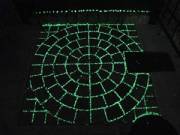
Photoluminescent decorations for gardens, arts and crafts, and design
“Our company designs and distributes photoluminescent materials and objects that can be used to decorate both indoor and outdoor spaces: Types of phosphorescent products
Our stones, mosaics and fragments glow naturally once night falls: their phosphorescent properties last for virtually an unlimited period of time”
For many years, our company has been developing an exceptional collection of photoluminescent materials intended for decoration as well as for safety and night-time marking.
Through our specialised range, we offer products capable of absorbing natural or artificial light during the day in order to emit visible light in the dark for several hours. These luminous materials offer virtually unlimited possibilities in the fields of interior design, gardening, architecture, design, arts and crafts, and signage.
A unique collection of photoluminescent materials
Our company, ARCO IRIS SAS, boasts what is probably one of the world’s most extensive and original collections of photoluminescent products. On our website, you can discover a wide variety of luminous objects and materials suited to a wide range of uses.
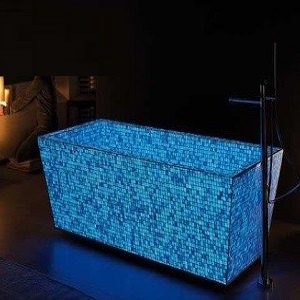
In particular, we offer photoluminescent mosaics for creating wall decorations or original artistic designs. These mosaics are particularly popular in bathrooms, swimming pools, spas, outdoor spaces and contemporary interiors requiring a subtle and elegant night-time lighting effect.
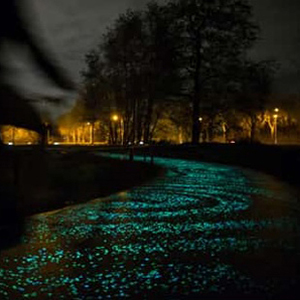
Our collection also includes phosphorescent stones for gardens, decorative luminous pebbles, photoluminescent gravel, and phosphorescent sand capable of illuminating paths, borders, ponds, terraces or landscaped areas once night falls.
We also supply rarer and more specialised materials such as photoluminescent beads, luminous papyrus, phosphorescent sewing threads and various media intended for creators, designers, decorators and artists.
In addition to this decorative range, we naturally stock a full range of technical and safety products: photoluminescent adhesives, light-emitting strips, safety signs, placards, self-adhesive films, road markings, evacuation markings and signage compliant with safety standards.
Manufacture of photoluminescent materials
The majority of modern photoluminescent materials use strontium aluminate-based pigments. These technical pigments currently represent the most advanced technology in the field of long-lasting phosphorescence.
Photoluminescent pigments are manufactured from a mineral mixture consisting mainly of strontium aluminate, to which various rare-earth activators such as europium or dysprosium are added. These components are heated to very high temperatures in industrial furnaces to produce a crystalline structure capable of storing light energy.
Once exposed to sunlight or an artificial light source, the crystals absorb light energy and then gradually re-emit it as visible light in the dark. Unlike the older zinc sulphide pigments, strontium aluminates offer much greater brightness and, above all, a much longer emission duration.
These pigments can then be incorporated into resins, plastics, paints, ceramics, glass, mosaics or composites to produce a wide variety of photoluminescent materials and objects.
Decorative and artistic paints
Photoluminescence is not limited to industrial safety or evacuation signage. We also offer decorative photoluminescent paints designed for artistic projects, creative hobbies and contemporary interior design.
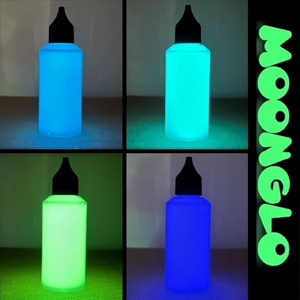
Some of our solvent-free, water-based paints are specially designed for artists, interior designers, schools, creative workshops or individuals wishing to create original luminous effects without using harsh chemicals. These phosphorescent paints can be used to decorate walls, objects, sculptures, models, paintings, ceilings, children’s bedrooms or art installations.
They can be used both to create decorative effects at night and to discreetly mark areas visible in the dark. The possible applications are extremely numerous: garden decoration, illuminated furniture, murals, event decoration, immersive sets, escape games, contemporary artworks and even innovative architectural projects.
We also offer transparent phosphorescent varnishes as well as technical inks that allow you to incorporate luminous effects into prints, textiles or personalised items.
Extremely durable materials
One of the major advantages of modern photoluminescent materials lies in their exceptional durability. Contrary to certain misconceptions, strontium aluminate-based photoluminescent pigments lose virtually none of their luminous properties over time.
Their luminous efficiency does not really diminish on a human timescale, and their phosphorescence can persist for several decades, or even over 100 years under good storage conditions.
The pigments themselves do not ‘wear out’ when they absorb and then re-emit light. It is mainly the substrates, resins or paints that may undergo mechanical or weather-related ageing, but the intrinsic photoluminescent properties of the crystals remain remarkably stable over time.
This exceptional longevity explains why photoluminescent materials are used in permanent applications for safety, architectural decoration or outdoor design. Photoluminescent mosaics, stones, panels or paints can thus retain their luminous properties for several generations.
Decorative and architectural applications
Photoluminescent materials are now opening up new possibilities in the fields of design and architecture. They enable the creation of vibrant, evolving spaces that change in appearance between day and night.
Luminous stones and gravel can mark out paths or highlight landscape features without consuming any electricity. Luminous mosaics can be used to create original wall decorations in spas, swimming pools or bathrooms. Phosphorescent paints can transform ceilings, works of art or scenographic installations.
Thanks to the diversity of our range, design professionals, architects, local authorities and private individuals now have access to unique decorative tools that combine aesthetics, innovation and sustainable night-time visibility.
Safe photoluminescent decorative materials
Our photoluminescent decorative products are made using modern strontium aluminate-based pigments; they contain no white phosphor, are non-radioactive and are free from the hazardous substances previously used in certain older luminous materials.
The products we supply present no particular toxicity when used normally for decorative or artistic purposes. They function solely by temporarily storing natural or artificial light and then gradually releasing it in the dark, without any dangerous chemical reactions or harmful emissions.
Resin and phosphorescent pigment
Our photoluminescent pigments (25 grades available from stock), based on strontium aluminate, produce intense and long-lasting luminous effects following exposure to natural or artificial light. For the production of a phosphorescent garden stone, for example, we use a resin and a phosphorescent pigment at a concentration of 5 per cent.
We also offer a range of transparent resins compatible with these pigments, designed for decorative, artistic, industrial or technical applications, such as flooring, moulded objects, inclusions or creations made from epoxy and polyurethane resins. Thanks to their excellent stability and high light-storage capacity, our pigments and resins enable the creation of durable photoluminescent designs for both indoor and outdoor use.
-
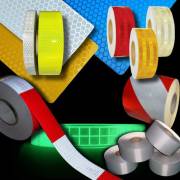
Adhesive and sew-on reflective strips for safety and signage
Retroreflective technologies reflect incident light directly back to its source, directing it through a spherical optical element, such as a glass microsphere. This principle applies to all types of reflective products enables very high visibility when a light beam, such as a vehicle’s headlights, illuminates a retro-reflective surface. We offer reflective tape, as well as more specialised tapes that possess both reflective AND phosphorescent properties.
As for our sew-on reflective tape, most are available in full rolls to order. Two types (standard and super high quality) are available on the product pages, in lengths of 5 or 50 metres and widths of 2 cm or 5 cm. These products are particularly suitable for safety clothing, workwear, bags, sportswear, professional textiles and accessories designed for outdoor and night-time activities.
A wide range of reflective tapes for all applications
Our range of reflective tapes includes various solutions tailored to the needs of professionals, local authorities and private individuals. We offer adhesive reflective tapes, sew-on tapes, high-intensity prismatic retro-reflective films, as well as tapes combining photoluminescence and retro-reflection.
Adhesive reflective tapes are particularly popular for marking vehicles, trailers, industrial equipment, machinery, gates, helmets, bicycles, scooters and surfaces exposed to traffic hazards. Thanks to their high visibility at night, they significantly improve safety in poorly lit areas.
We also offer reflective tape in a range of colours: white, red, yellow, orange, green, blue and even reflective black for certain specific applications. Some products offer very high light intensity thanks to professional-grade prismatic technology used in road signage and emergency vehicles.
Adhesive reflective tape
Our products are suitable for professionals, local authorities and private individuals alike. If you wish to order multiple items, please do not hesitate to request a quote by email. We can offer attractive pricing depending on the quantity. We accept administrative payment orders.
Retro-reflective stickers can be applied to most smooth surfaces and adhere firmly without the risk of peeling off. All our products are researched and designed to withstand weather conditions such as rain, sun, heat and frost. The adhesives used are formulated to offer excellent outdoor durability and good resistance to UV rays and climatic variations.
Each reflective adhesive strip is available in lengths of 5 metres or 50 metres, widths ranging from 5 to 15 cm, and in a variety of colours. These products have an estimated outdoor lifespan of approximately 1 year for standard versions, and up to 7 years for our high-intensity prismatic retro-reflective adhesive.
All our rolls are also available in 1-metre-wide uncut rolls on request, for manufacturers or converters wishing to carry out their own cutting, printing or specific production runs. Wholesale prices are available for large orders.
Types of reflective tape
We offer various types of reflective tape suited to the needs of signage, safety, textiles and technical decoration.
Our range includes adhesive reflective tapes, sew-on tapes for high-visibility clothing, high-intensity prismatic retro-reflective films, as well as models combining reflective and photoluminescent properties. Available in a variety of colours, widths and performance levels, these products are suitable for professional, industrial, urban and creative applications alike
Standards relating to reflective tapes
The standards relating to reflective tapes intended for safety and signage (European and international standards) define their retroreflective performance, night-time visibility and resistance to outdoor conditions.
Depending on the application, they may comply with standards such as EN 12899 for road signage, EN ISO 20471 for high-visibility clothing, or regulations relating to the marking of industrial and transport vehicles. These standards specify, in particular, minimum levels of light reflectivity, durability, adhesion and weather resistance to ensure effective visibility both day and night.
Reflective paints
Our range of reflective paints includes several solutions tailored to the needs of private individuals, artists, local authorities and professionals in the safety or signage sectors. We offer single-component retro-reflective paints, two-component polyurethane paints, reflective acrylic gels, as well as various packaging options for small or large surfaces.
The new ECHO Gel 2026 formula represents a significant advancement in the field of reflective coatings. Unlike conventional liquid paints, this acrylic gel has a higher viscosity, which ensures that the reflective microbeads remain evenly distributed throughout the product. This texture also makes it easier to apply to vertical surfaces, as well as to wood, metal, concrete, plastic, canvas, street furniture and decorative elements.
Reflective tapes for sewing onto clothing and textiles
Reflective textile tapes are designed to be sewn directly onto clothing or flexible accessories. They are widely used in the construction, public works, logistics, transport, safety, cycling and high-visibility workwear sectors.
Our standard models already offer excellent night-time visibility, whilst our high-quality versions provide much more intense light reflection and greater resistance to washing and abrasion. Certain products are designed to withstand the rigours of professional workwear subjected to repeated washing or harsh weather conditions.
We also offer hybrid phosphorescent reflective tapes. These specialised materials provide night-time visibility even in complete darkness, thanks to their ability to store and release light. When a beam of light strikes the tape, the retro-reflective section immediately reflects the light back to its source, whilst the phosphorescent section continues to emit visible light after the light source has been switched off.
Composition and operation of retro-reflective adhesives
Retro-reflective adhesives are relatively complex technical materials. Their operation relies primarily on the presence of transparent glass microspheres or prismatic microstructures capable of reflecting light back in the exact direction of the light source.
In the case of glass microsphere films, millions of spherical microspheres are embedded in an adhesive or resin matrix. These microspheres are precisely calibrated to achieve an optimal angle of refraction. They are bonded to a flexible backing, usually made of PVC, PET or polyurethane, and then covered with a transparent protective plastic film.
The optical performance depends heavily on the presence of a thin layer of air between the microspheres and the transparent cover film. This air/glass interface plays a vital role in the phenomenon of retroreflection. Without this layer of air, the light could not be effectively reflected back towards its light source.
It is also for this reason that microbead-based retroreflective materials must never be permanently and completely submerged in water. Prolonged immersion removes the air interface that is essential to the optical functioning of the microbeads. When water penetrates between the layers or around the beads, the retroreflective performance decreases significantly, or may even disappear temporarily.
The films are then laminated, cut to size and sometimes printed before being sold. Some high-end products use multi-layered prismatic structures that are far more effective than conventional microbeads. These prismatic technologies produce an extremely powerful light reflection, visible from a very great distance, particularly for road signs, emergency vehicles or industrial safety applications.
Applications of reflective tapes
Retro-reflective tapes are used across many sectors. They help to increase the visibility of people, objects or vehicles in low-light conditions.
They are commonly used on: Thanks to their visual effectiveness, they play a major role in preventing accidents and improving the safety of people and facilities.
- commercial vehicles;
- trailers;
- bicycles and scooters;
- safety clothing;
- sports bags and equipment;
- helmets;
- industrial machinery;
- road signs;
- nautical equipment;
- hazardous areas or staircases.
Bespoke manufacturing and professional solutions
We can also supply custom-cut reflective tape, industrial rolls, specific formats or materials suited to particular technical applications. Certain products can be customised with printing, cutting, special shapes or combined with photoluminescent backing.
Our solutions are aimed at manufacturers, local authorities, security companies, signage workshops, manufacturers of technical clothing and professionals in the field of marking and high-visibility products.
-
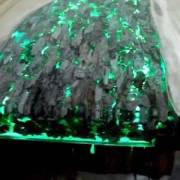
Phosphorescent pigments and resins
Creating something with a truly unique special effect is easy and within everyone’s reach with glow-in-the-dark decorations. By using a phosphorescent pigment (there are dozens to choose from) and epoxy resin, you can create a luminous and natural piece by combining all sorts of objects, shapes and ideas with phosphorescent pigments suspended in their transparent medium – the epoxy resin!
How does it work? How do you do it? What are the proportions? How long does it glow for? Let’s try to answer all these questions briefly.
Photoluminescence is a natural and harmless phenomenon produced by a molecular reaction. It works through exposure to any type of light (this is the excitation, or recharging with energy). It can glow for several hours and even up to 12 hours depending on the colours, and its effectiveness and lifespan can be measured in decades…!
To make the mixture, simply add the powders (around 10 per cent), along with a medium that allows light to pass through – a transparent medium.
Which phosphorescent pigment should I use for the resin?
There are pros and cons to everything, and you need to make the right choice to ensure your project is a success.
Strontium aluminate powders come in several sizes: some are very fine and light; they diffuse light well, float easily due to their microscopic weight, and glow for a slightly shorter time. Other particles are larger, heavier and brighter: there are fewer of these, so they diffuse less light, and, above all, they have the major drawback of sinking more quickly in a mixture because of their weight.
You should choose your phosphorescent pigment first and foremost based on the colour you want (the colour emitted in the dark! Phosphorescent resins and pigments have no colour in daylight, as the powders are almost colourless when mixed into a transparent epoxy resin).
When choosing phosphorescent pigments, we recommend starting with a ‘strong’ pigment in a green or turquoise shade, with a fine or very fine particle size of around 5 to 15 microns. Reserve the use of coarse pigments for fine, fast-drying phosphorescent resins.
Which resin should you use to create a phosphorescent casting?
This is a very important decision. To make this choice, and before considering a resin-pigment mixture, it is crucial to understand which resin to use for a phosphorescent casting, as well as how the drying and curing processes work. We’ll explain everything about volume, temperature and the exothermic process in the next section.
Which product should you use to create a coloured phosphorescent resin?
This isn’t a simple question, and many users are misled by certain photos and videos posted on social media. What are the real possibilities, which products should be used to create coloured phosphorescent resins, and why can’t dyes be used? We explain this in this article. The possibilities boil down to using coloured bases or adding fluorescent powders.
Which phosphorescent product should you use to prevent sedimentation?
It is mainly a question of making the most of the resin’s properties, particularly its viscosity, as well as its ‘gel time’, which is the curing time. Asking yourself ‘which phosphorescent products to use to prevent sedimentation’ also means choosing the right pigments and calculating the mixing quantities correctly, to avoid sedimentation (where everything settles at the bottom).
Which pigment should you use to create a super-phosphorescent resin?
The intensity of phosphorescence is known as luminance. Phosphorescence is the emission of light; whilst it cannot match that of an electric lamp, it can still reach respectable levels!
Different levels of performance can be achieved. To find out which pigment to use to create a super-phosphorescent resin, we invite you to follow our expert advice on the subject. In summary, the luminous efficiency will depend on your choice of pigment types, the mixing ratios, the background colour, and, of course, the type of light source.
Glow-in-the-dark stones, mosaics and glow-in-the-dark gravel


